


Futures
Access hundreds of perpetual contracts
TradFi
Gold
One platform for global traditional assets
Options
Hot
Trade European-style vanilla options
Unified Account
Maximize your capital efficiency
Demo Trading
Futures Kickoff
Get prepared for your futures trading
Futures Events
Join events to earn rewards
Demo Trading
Use virtual funds to experience risk-free trading
Launch
CandyDrop
Collect candies to earn airdrops
Launchpool
Quick staking, earn potential new tokens
HODLer Airdrop
Hold GT and get massive airdrops for free
Launchpad
Be early to the next big token project
Alpha Points
Trade on-chain assets and earn airdrops
Futures Points
Earn futures points and claim airdrop rewards






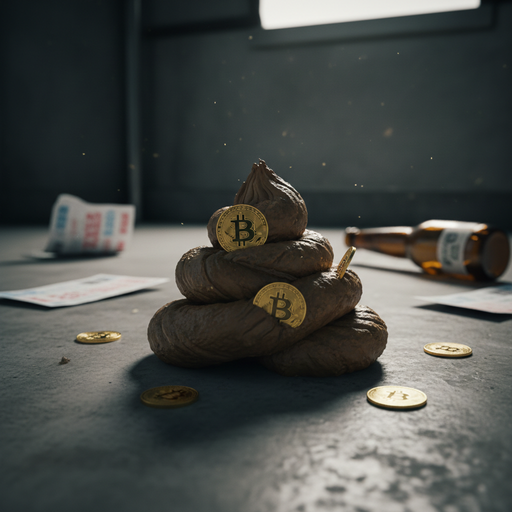
Who Created Pi Network: Understanding the Founding Team & Legitimacy Assessment
Pi Network has attracted significant attention in the cryptocurrency space, but many potential participants ask: who actually created Pi Network and is the project legitimate? The answer requires examining both the founding team’s credentials and the project’s current development status. Understanding who created Pi Network is crucial for evaluating whether this cryptocurrency initiative represents a genuine technological endeavor or carries substantial risks.
The Founding Team Behind Pi Network: Who Created This Project?
The question of who created Pi Network leads directly to Dr. Nicolas Kokkalis, who serves as CEO and co-founder. A computer scientist and entrepreneur with over 15 years of technology industry experience, Kokkalis represents one of the key figures responsible for launching this initiative. Alongside Kokkalis, Chengdiao Fan holds the position of President at Socialchain, Inc., the company that created Pi Network. Fan brings a PhD from Stanford University and significant expertise in computer science, lending academic credibility to the project’s foundation.
The broader team assembled to develop Pi Network includes several experienced professionals. Vince McPhillip serves as CTO with over 20 years of software engineering experience. Kostas Papadopoulos, Head of Engineering, brings 15+ years in the field. Marcelo Garcia leads International Marketing with a decade of industry experience, while Adrián Pulido oversees Product Development. Nikolaos Patsakis, the Head of Security, and Yiling Wang, Head of Community, complete the core leadership structure. On paper, this team composition demonstrates substantial combined experience in technology sectors.
How Pi Network Operates: The Technology Behind the Vision
Understanding how Pi Network functions requires examining its technical approach. The project claims to utilize blockchain technology combined with a modified “proof of stake” consensus mechanism, allegedly allowing smartphone users to mine Pi without expensive hardware. According to the official narrative, users simply open the Pi Network app and activate the “Mine” button, with mining rewards increasing as more users join the network.
This approach differs significantly from traditional cryptocurrency mining models that demand substantial computational resources. The theoretical accessibility of smartphone-based participation has contributed to the project’s appeal across mainstream audiences unfamiliar with crypto technology.
Current Project Status: Why Mainnet Launch Remains Critical
A fundamental concern about Pi Network’s legitimacy centers on a critical milestone: there is no mainnet launched yet. This represents one of the most significant red flags. Without a functioning mainnet, Pi Network remains in an extended test phase rather than operating as an active blockchain.
The project currently exists in what the team describes as the “enclosed network phase.” This extended development period—now spanning multiple years—raises legitimate questions about project viability and timeline realism. Additionally, there is no official Pi token available yet. This distinction matters because fake Pi tokens have appeared on various exchanges, creating confusion and opportunity for scammers.
Identifying Legitimate vs. Fraudulent Pi: Verification Guidelines
A crucial piece of information for anyone investigating Pi Network concerns fake tokens. CoinMarketCap and Coingecko, the major cryptocurrency data platforms, display explicit warnings that certain “Pi” tokens circulating on exchanges are counterfeit. These fake tokens exist precisely because legitimate Pi remains unavailable for trading despite years of network development.
The Pi Network team has actively warned users that any Pi tokens currently tradeable represent unauthorized copies. The absence of an official token means users holding “Pi” from exchanges possess assets unrelated to the actual Pi Network project. This situation has created an environment where scammers actively trick uninformed users into purchasing fake tokens or trading legitimate Pi holdings to scammers who then disappear.
Legitimacy Assessment: Examining Both Supporting Evidence and Major Concerns
Factors supporting potential legitimacy:
The team’s documented background in technology sectors provides some credibility foundation. The project maintains an active, engaged community of users. The Pi Network codebase is open-source, theoretically allowing anyone to audit the code for transparency. These elements suggest the project differs from obvious Ponzi schemes lacking technical infrastructure.
Significant red flags and concerns:
However, multiple serious issues warrant caution. The extended development period without mainnet launch raises questions about technical feasibility or project authenticity. The team has been notably non-transparent regarding future monetization plans and detailed roadmaps. No clear mechanism for converting accumulated Pi holdings into tradeable assets has been established. Users have reported the Pi app exhibits technical issues including bugs, slowness, crashes, and freezing problems. Documentation of scams targeting Pi Network users who believed they could sell holdings demonstrates real financial harm occurring. The required KYC verification process before mainnet transition adds another layer of uncertainty regarding privacy and data usage.
The personal data collection practices of the Pi Network app remain a concern, particularly regarding how personal information might be utilized by the project or third parties.
Investment & Participation Risks: What Prospective Users Should Know
For anyone considering participation in Pi Network, several practical realities require acknowledgment. First, you cannot currently sell Pi Coin on exchanges because the network remains in the enclosed testing phase. Transition to the mainnet open network requires official Pi Network team actions combined with completed KYC verification from participants.
The mining rate structure limits how much Pi any individual user can accumulate. The project’s monetization model remains unclear—how the team generates revenue or what the long-term economics entail has not been comprehensively explained.
Most critically, the abundance of scam tokens exploiting the Pi Network name creates active risk for participants. Any opportunity claiming to allow Pi sales or trading should be regarded with extreme suspicion given the authentic token’s non-availability.
Final Assessment: Approaching Pi Network with Realistic Expectations
Whether Pi Network ultimately proves legitimate or represents a failed project depends on outcomes still undetermined. The project exists in an ambiguous state: possessing some characteristics suggesting genuine technical work (experienced team, open-source code, active community) while simultaneously exhibiting major warning signs (no mainnet after years, non-existent official token, unclear monetization, technical problems).
The individuals who created Pi Network appear to possess relevant technology backgrounds. However, background credentials alone do not guarantee project success or legitimacy. The Pi Network team’s demonstrated lack of transparency about future plans and sustained delay of mainnet launch remain the primary legitimacy concerns.
For potential participants, the essential guidance is simple: conduct thorough independent research, understand that official Pi tokens do not currently exist on any exchange, recognize that any Pi available for purchase represents a counterfeit copy, and only participate in Pi Network with funds you can afford to lose entirely without financial hardship.