


Futures
Hundreds of contracts settled in USDT or BTC
TradFi
Gold
One platform for global traditional assets
Options
Hot
Trade European-style vanilla options
Unified Account
Maximize your capital efficiency
Demo Trading
Futures Kickoff
Get prepared for your futures trading
Futures Events
Join events to earn rewards
Demo Trading
Use virtual funds to experience risk-free trading
Launch
CandyDrop
Collect candies to earn airdrops
Launchpool
Quick staking, earn potential new tokens
HODLer Airdrop
Hold GT and get massive airdrops for free
Launchpad
Be early to the next big token project
Alpha Points
Trade on-chain assets and earn airdrops
Futures Points
Earn futures points and claim airdrop rewards



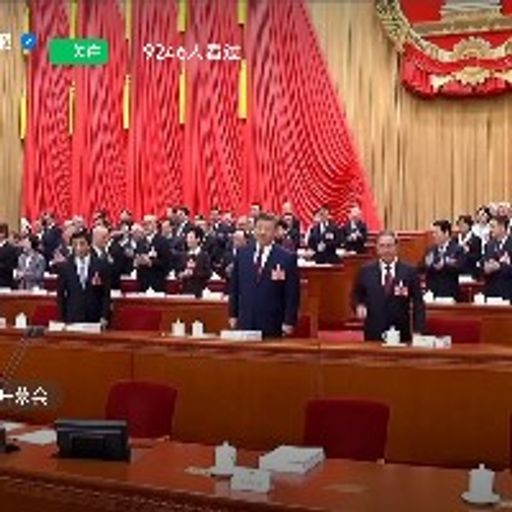



After ten years, the "de-stocking" policy is revisited. The government work report sets the tone for real estate by controlling new supply and stabilizing the market
On March 5th, the 14th National People’s Congress held its fourth session in Beijing, where Premier Li Qiang delivered the government work report. The report emphasized stabilizing the real estate market, encouraging the purchase of existing commercial housing mainly for affordable housing, continuing to deepen the reform of the housing provident fund system, accelerating the renovation of dilapidated houses, and promoting the construction of “good houses.”
Notably, for the first time in ten years, the government work report mentioned “destocking,” which industry insiders see as the most important task for the real estate sector this year. Additionally, the report highlighted strengthening housing security for newly married and newly parented families and supporting multi-child families’ demand for improved housing. Industry experts believe that future real estate policies will become more targeted.
Focusing on Stabilizing the Real Estate Market
Regarding the achievements in real estate work by 2025, the government work report stated that over the past year, efforts to stabilize the housing market continued, with reasonable control over new land supply, city-specific measures to reduce restrictive policies, lowering mortgage interest rates for individual housing loans, and full completion of the “guaranteed delivery” task. Compared to 2025, the focus of real estate work in 2026 has shifted.
The Huaxia Times reporter noted that the government work report dedicated nearly 200 words to this year’s real estate work deployment. It pointed out that efforts will focus on stabilizing the market, controlling new supply, destocking, optimizing supply, exploring multiple channels to activate existing commercial housing, and encouraging the purchase of existing housing mainly for affordable housing.
“This reflects a good coordination between stock and incremental housing, commercial and affordable housing. It’s clear that destocking is the core task this year, and the effort to activate existing commercial housing will be further intensified and effectively linked with affordable housing,” said Yan Yuejin, Deputy Director of the E-House Research Institute in Shanghai, to Huaxia Times.
It is worth noting that this is the first mention of “destocking” in ten years in the government work report. The China Index Academy told Huaxia Times that unlike the previous destocking efforts, this round involves both new and second-hand homes, and policies are expected to be more targeted.
On the supply side, the report pointed out the deepening reform of the housing provident fund system, optimizing the supply of affordable housing, accelerating the renovation of dilapidated houses, and orderly promoting the construction of “good houses” that are safe, comfortable, green, and smart, along with initiatives to improve housing quality and property management services.
“The supply model for affordable housing is expected to be further optimized, closely related to activating stock housing. This means there may be significant adjustments in the supply of affordable housing this year, and local governments need to focus on this when formulating policies,” Yan Yuejin said.
Policies Will Be More Precise
In recent years, establishing new development models for real estate has been seen as key to industry transformation. The government work report stated that efforts will be made to further leverage the “guaranteed delivery” whitelist system to prevent debt default risks, and to deepen the construction of foundational and supporting policies for new development models. High-quality urban renewal will be promoted steadily, including renovations of old urban neighborhoods and villages, and activating idle land and housing facilities.
“This indicates that the development of new real estate models will enter a deeper stage this year, with a greater focus on foundational systems and supporting policies. The report also emphasizes further leveraging the whitelist system to prevent debt risks,” said the China Index Academy.
It is also noteworthy that this year’s government work report linked housing policies with population and fertility policies. It highlighted strengthening housing security for newly married and newly parented families and supporting multi-child families’ demand for improved housing.
“The policy support is becoming more targeted. Housing security for newly married and newly parented families and improved housing for multi-child families are key focuses. It is expected that demand-side policies this year will become more refined and precise, and integrating housing and population policies is an important direction. Recently, many cities have optimized their housing policies, reflecting this trend,” the China Index Academy commented.
For example, Nanchong recently announced that it would pioneer the inclusion of marriage support into its policy system, offering a one-time personal housing consumption loan with a subsidy of 1% of the loan amount for couples registering their marriage for the first time within the city, with a maximum loan amount of 200,000 yuan.
Core Cities May Continue to Optimize Policies
The China Index Academy told Huaxia Times that: “Compared to the 2025 government work report, this year’s real estate content emphasizes safeguarding and improving people’s livelihoods, highlights the integration of housing and population policies, and further balances short-term market stabilization with long-term institutional development, strengthening the coordination of new and existing housing, risk prevention, and development promotion.”
“From the policy trend, demand-side efforts this year are expected to focus on lowering purchase thresholds, reducing costs, and increasing willingness and ability to buy homes, such as continuing to optimize restrictive policies in core cities, lowering mortgage rates, reducing agency fees, and increasing mortgage interest deductions for individual income tax,” the institute added.
Earlier this year, Shanghai issued new policies to reduce purchase restrictions. The Huaxia Times reporter noted that these new policies have revitalized the Shanghai housing market. Data from the China Index Academy showed that in the first week after the policy, second-hand home transactions in Shanghai quickly rebounded, with an average of 685 units sold per day that week.
On the supply side, Yan Yuejin believes that continuous destocking is key; as inventory decreases, supply and demand will balance, and housing price expectations will stabilize, which is crucial for current work.