


Futures
Hundreds of contracts settled in USDT or BTC
TradFi
Gold
One platform for global traditional assets
Options
Hot
Trade European-style vanilla options
Unified Account
Maximize your capital efficiency
Demo Trading
Futures Kickoff
Get prepared for your futures trading
Futures Events
Join events to earn rewards
Demo Trading
Use virtual funds to experience risk-free trading
Launch
CandyDrop
Collect candies to earn airdrops
Launchpool
Quick staking, earn potential new tokens
HODLer Airdrop
Hold GT and get massive airdrops for free
Launchpad
Be early to the next big token project
Alpha Points
Trade on-chain assets and earn airdrops
Futures Points
Earn futures points and claim airdrop rewards



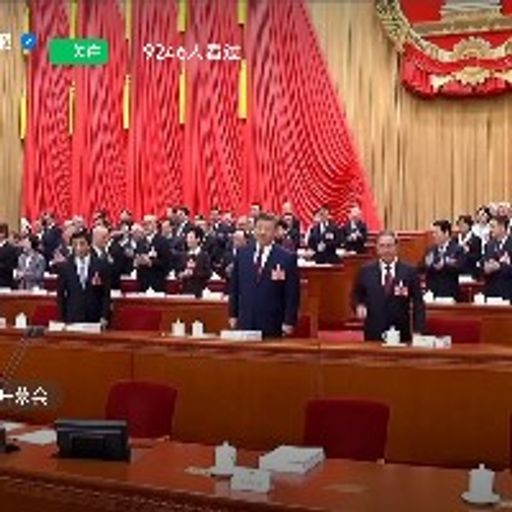



Member of the National Committee of the Chinese People's Political Consultative Conference, Zhihu Founder and CEO Zhou Yuan: Strengthen the Structuring, Accumulation, and Long-term Utilization of Popular Science Resources
People’s Financial News, March 7 — At this year’s National People’s Congress and Chinese People’s Political Consultative Conference, Zhou Yuan, member of the National Committee of the Chinese People’s Political Consultative Conference, founder and CEO of Zhihu, offered suggestions on topics including the structured preservation and long-term utilization of science popularization resources, protection of short story IPs, and high-quality development of AI animation industries.
Zhou Yuan told reporters that in recent years, under the high regard of the state for improving the scientific literacy of all citizens, China’s science popularization efforts have achieved significant results in content supply scale, diversification of dissemination entities, and richness of communication channels. Research institutions, universities, academic groups, and new media platforms continue to increase investment in science popularization. The public’s access to scientific knowledge has become more convenient, and the coverage and social visibility of science content have markedly improved, laying a solid foundation for enhancing public scientific literacy and fostering an innovative culture. Overall, China has accumulated a considerable amount of science popularization resources across various fields, and public awareness and participation in science efforts continue to grow.
However, he pointed out that current science popularization resources still mainly rely on information flow-based distribution, with a large amount of high-quality content existing in fragmented forms, having short lifecycles and low reuse rates. This makes it difficult to form sustainable public knowledge assets, increasing redundant production costs and weakening the long-term social benefits of science outreach. Meanwhile, the evaluation of science popularization effectiveness still largely depends on superficial metrics such as page views and clicks, which fail to truly reflect the professionalism, scientific rigor, and long-term social value of the content. This results in insufficient incentives for high-quality, systematic science communication achievements, and makes it difficult to effectively record and recognize the contributions of researchers in science popularization, thereby constraining the institutional motivation for professional groups to continue participating in science outreach.
In response, Zhou Yuan suggested promoting the transformation of science popularization achievements into “long-term preserved and structured public knowledge assets.” In science policy and project design, it is important to clearly distinguish between science content and immediate, traffic-driven content, guiding the organization and management of science popularization results in a way that allows for long-term retention and repeated access.