


Futures
Hundreds of contracts settled in USDT or BTC
TradFi
Gold
One platform for global traditional assets
Options
Hot
Trade European-style vanilla options
Unified Account
Maximize your capital efficiency
Demo Trading
Futures Kickoff
Get prepared for your futures trading
Futures Events
Join events to earn rewards
Demo Trading
Use virtual funds to experience risk-free trading
Launch
CandyDrop
Collect candies to earn airdrops
Launchpool
Quick staking, earn potential new tokens
HODLer Airdrop
Hold GT and get massive airdrops for free
Launchpad
Be early to the next big token project
Alpha Points
Trade on-chain assets and earn airdrops
Futures Points
Earn futures points and claim airdrop rewards



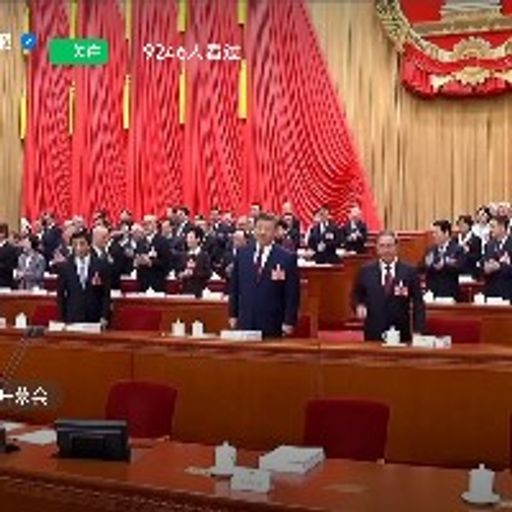



Besent suggests lifting more sanctions on Russian crude oil, releasing "stranded offshore oil" to ease prices
U.S. Secretary of the Treasury Janet Yellen signals further easing of sanctions on Russian crude oil, bringing new downward pressure to the global oil market. Analysts believe that currently, sanctioned crude oil from Russia, Iran, and Venezuela has accumulated offshore to a total of 375 million barrels. Once sanctions are lifted and this oil re-enters land-based pricing centers, it could cause a substantial impact on oil prices.
On March 6, Reuters reported that Yellen stated in an interview with Fox Business, “We may lift sanctions on more Russian crude oil.” She pointed out that, “There are hundreds of millions of barrels of sanctioned oil offshore. Essentially, by lifting sanctions, the Treasury can create supply, and we are studying this issue.”
This statement came the day after Washington issued a 30-day exemption—allowing currently stranded Russian oil to continue being sold to India. According to Global Times, on March 5, Yellen announced that “to ensure the continued flow of crude oil into global markets,” the U.S. Treasury would issue a temporary 30-day exemption permitting Indian refiners to purchase Russian crude oil.
Goldman Sachs’ commodities research team previously provided a quantitative framework for this policy signal. Goldman pointed out that, reducing offshore crude oil inventories by 100 million barrels—i.e., sanctioned oil flowing into land-based markets—would lower Brent crude prices by $3 to $4 per barrel. This implies that if the “hundreds of millions of barrels” of sanctioned oil mentioned by Yellen are significantly released into the market, downward pressure on prices could be considerable.
375 Million Barrels of Oil “Stranded Offshore” as a Hidden Support for Oil Prices
Goldman Sachs’ commodities research team noted in a prior report that, despite a global crude oil oversupply of about 1.5 million barrels per day, Brent prices have not experienced sustained declines this year. The core reason is that this excess supply has not truly entered land-based pricing centers.
The report shows that sanctioned crude oil inventories from Russia, Iran, and Venezuela offshore have increased by approximately 130 million barrels compared to the same period last year, totaling 375 million barrels—accounting for one-third of the annual increase in visible global crude inventories. Meanwhile, land-based commercial inventories in OECD countries have remained relatively stable.
Goldman analysts Daan Struyven, Filippo Cuscito, Alexandra Paulus, and Yulia Zhestkova Grigsby wrote in the report:
Goldman Quantifies Price Impact of Easing Sanctions: $3 to $4 Price Drop per 100 Billion Barrels Entering Market
Goldman’s report offers two empirical rules to assess how sanctions easing might impact oil prices, providing clearer market reference points.
This framework suggests that if the “hundreds of millions of barrels” of sanctioned Russian oil mentioned by Yellen are gradually released and reach land, the cumulative downward pressure on prices could reach double digits per barrel, depending on the scale and pace of release.
Demand-Side Signals Are Complex; Path to Sanctions Easing Remains Uncertain
Although Yellen’s remarks are clear, whether sanctioned oil can smoothly enter the market still depends on multiple demand-side variables.
Goldman reports that some industry experts expect India’s purchases of Russian oil to decrease from the current 1.3 million barrels per day to between 700,000 and 900,000 barrels per day, as India actively promotes energy diversification toward U.S. and Middle Eastern supplies.
India’s Commerce Minister Goyal stated in mid-February that buying oil or LNG from the U.S. “aligns with India’s strategic interests.”
Goldman also notes that if negotiations between Russia and Ukraine fail to reach an agreement, pressure on Asian buyers to reduce Russian oil imports could increase.
In their baseline scenario, Goldman assumes that by 2026, offshore crude inventories will account for 21% of the global inventory increase—down from 47% in 2025—but the pace of sanctions easing or geopolitical negotiations could significantly deviate from these expectations, posing both upside and downside risks to oil prices.
Risk Warnings and Disclaimers
Market risks exist; investment should be cautious. This article does not constitute personal investment advice and does not consider individual user’s specific investment goals, financial situation, or needs. Users should consider whether any opinions, views, or conclusions herein are suitable for their particular circumstances. Investment involves risk; responsibility rests with the individual.