

Trade
Basic
Futures
Futures
Hundreds of contracts settled in USDT or BTC
Options
HOT
Trade European-style vanilla options
Unified Account
Maximize your capital efficiency
Demo Trading
Futures Kickoff
Get prepared for your futures trading
Futures Events
Participate in events to win generous rewards
Demo Trading
Use virtual funds to experience risk-free trading
Earn
Launch
CandyDrop
Collect candies to earn airdrops
Launchpool
Quick staking, earn potential new tokens
HODLer Airdrop
Hold GT and get massive airdrops for free
Launchpad
Be early to the next big token project
Alpha Points
NEW
Trade on-chain assets and enjoy airdrop rewards!
Futures Points
NEW
Earn futures points and claim airdrop rewards
Investment
Simple Earn
Earn interests with idle tokens
Auto-Invest
Auto-invest on a regular basis
Dual Investment
Buy low and sell high to take profits from price fluctuations
Soft Staking
Earn rewards with flexible staking
Crypto Loan
0 Fees
Pledge one crypto to borrow another
Lending Center
One-stop lending hub
VIP Wealth Hub
Customized wealth management empowers your assets growth
Private Wealth Management
Customized asset management to grow your digital assets
Quant Fund
Top asset management team helps you profit without hassle
Staking
Stake cryptos to earn in PoS products
Smart Leverage
NEW
No forced liquidation before maturity, worry-free leveraged gains
GUSD Minting
Use USDT/USDC to mint GUSD for treasury-level yields

More


Trending Topics
View More25.8K Popularity
335.92K Popularity
46.66K Popularity
8.26K Popularity
6.87K Popularity
Hot Gate Fun
View More- MC:$3.94KHolders:22.33%
- MC:$3.44KHolders:10.00%
- MC:$3.54KHolders:20.30%
- MC:$3.47KHolders:20.00%
- MC:$3.46KHolders:10.00%



Pin
🎉 Gate 2025 Gala | Year-End Selection
Congratulations! You’ve unlocked a no-threshold chance to win an iPhone 17 Pro Max!
🎁 Free lucky draw | 100% guaranteed win
🔥 More prizes added to the pool:
GT, Gate × Red Bull tote bag, Gate VIP Premium Gift Box, $100 position voucher, and more!
👉 Support your favorite streamers & content creators
Vote to join the lucky draw
30 support points = 1 draw entry
✨ Check your support points now
https://www.gate.com/activities/community-vote-2025Gate Square New & Returning Creator Rewards are ongoing!
Your ideas may be more valuable than you think!
Make your first post or come back post to share a $20,000 monthly prize pool!
Post with #MyFirstPostOnSquare to receive a $50 Position Voucher each
Monthly Top Posters and Top Engagers will each earn an extra $50 reward
Your crypto insights could inspire many—start creating today!
👉 https://www.gate.com/postGate Square “Creator Certification Incentive Program” — Recruiting Outstanding Creators!
Join now, share quality content, and compete for over $10,000 in monthly rewards.
How to Apply:
1️⃣ Open the App → Tap [Square] at the bottom → Click your [avatar] in the top right.
2️⃣ Tap [Get Certified], submit your application, and wait for approval.
Apply Now: https://www.gate.com/questionnaire/7159
Token rewards, exclusive Gate merch, and traffic exposure await you!
Details: https://www.gate.com/announcements/article/47889Gate 2025 Year-End Gala Square TOP50 List Announced!
The final ranking phase is now live.
Earn Votes by watching live streams and posting.
30 Votes = 1 chance — support your favorite creators now!
👉 https://www.gate.com/activities/community-vote-2025
iPhone 17 Pro Max, JD gift cards, Mi Band, Gate merch await you!
Creators are welcome to rally fans to climb the rankings and win rewards!
Voting ends: Jan 20, 02:00 UTC
Details: https://www.gate.com/announcements/article/48693
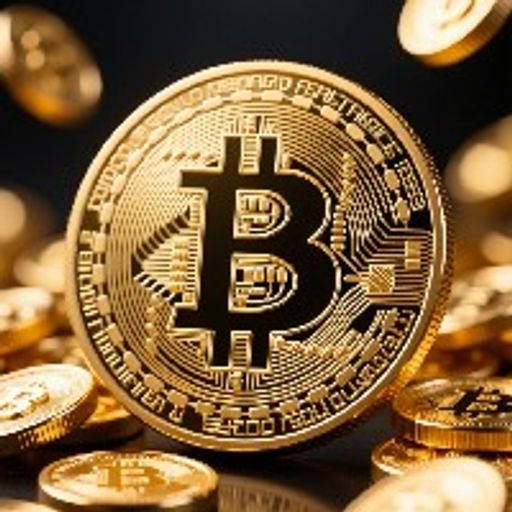
Bitcoin consolidates itself as the Valyrian steel of finance
Source: CritpoTendencia Original Title: Bitcoin consolidates itself as the Valyrian steel of finance Original Link: On January 18th, the premiere of the new Game of Thrones universe series, The Knight of the Seven Kingdoms, paralyzed much of the world. Almost everyone, except Bitcoin. The largest cryptocurrency and its blockchain network continue to operate nonstop, reaffirming its status as a financial phenomenon capable of functioning 24/7.
Attributes such as scarcity, resistance, and predictability also contribute to this. In this sense, it can be said that Bitcoin is consolidating itself as the Valyrian steel of finance.
Now that Westeros is once again at the center of cultural conversation, it’s worth drawing some parallels between the pioneering crypto and the universe of A Song of Ice and Fire.
How is Bitcoin similar to Valyrian steel?
Unlike gold coins minted by the Master of the Mint, whose alloy can be altered by kings to issue more units and finance wars or pay debts with the Iron Bank, Valyrian steel is scarce, resistant, and virtually impossible to replicate. Something very similar happens with Bitcoin, a currency that does not swear loyalty to any crown nor responds to political interests.
In a world dominated by central banks that expand the monetary base and transfer the inflationary cost of that issuance to households and taxpayers, Bitcoin emerges as an alternative. It is an asset comparable to gold due to its scarcity dynamics, but more accessible and democratic, as it is within reach of anyone with a device and an internet connection.
Bitcoin as the great borderless alternative
The underlying technology of Bitcoin, blockchain, has the capacity to remain operational even in scenarios of severe global instability. This makes it one of the most robust and resilient financial systems in the world. Unlike traditional reserve assets like gold or silver, BTC is accessible to anyone thanks to its divisibility into minimal units.
This means that even with $10 , it is possible to acquire multiple fractions of BTC, known as satoshis. In fact, the price of 1 SAT hovers around $0.0009257, clearly illustrating how easy it is to gain exposure to Bitcoin without large capital investments.
As large companies and institutions continue to absorb the limited supply of Bitcoin, capped at 21 million units, the value of satoshis tends to appreciate. In this context, a consistent and long-term strategy based on accumulating fractions of BTC could present a significant opportunity in the future.
The key, as mentioned before, is that Bitcoin is scarce, just like Valyrian steel. But it also has a secure, decentralized, and censorship-resistant network.
This means that a person who keeps their BTC in a self-custody wallet can preserve their wealth without relying on intermediaries. No government, bank, or other entity can freeze or seize those funds without access to the private keys.
At this point, decentralization becomes fundamental, since Bitcoin is not issued by any central bank nor controlled by a single authority.
Winter is coming for fiat money
In a financial system where ordinary citizens occupy the last link in the liquidity distribution chain, fiat money ends up eroding the purchasing power of those with the least margin of maneuver. Money creation by central banks is distributed hierarchically.
The actors closest to the money printer —governments, large corporations, and banks— receive liquidity first and deploy it before inflation manifests. Then, the money flows to medium-sized companies and secondary actors. Finally, it reaches households and taxpayers, when the widespread increase in prices is already established and wages lose purchasing power.
Bitcoin was born precisely as a response to this dynamic. While central banks continue to issue inorganic money, individuals have the option to store value in BTC. If this trend deepens, the inflation tax loses effectiveness, as fewer and fewer individuals will be willing to absorb it. In that scenario, fiat money could face its own winter.
Bitcoin will not grant you a noble title, but it guarantees that, no matter what happens, your treasure will remain yours.