Qu'est-ce que Yieldbasis ?
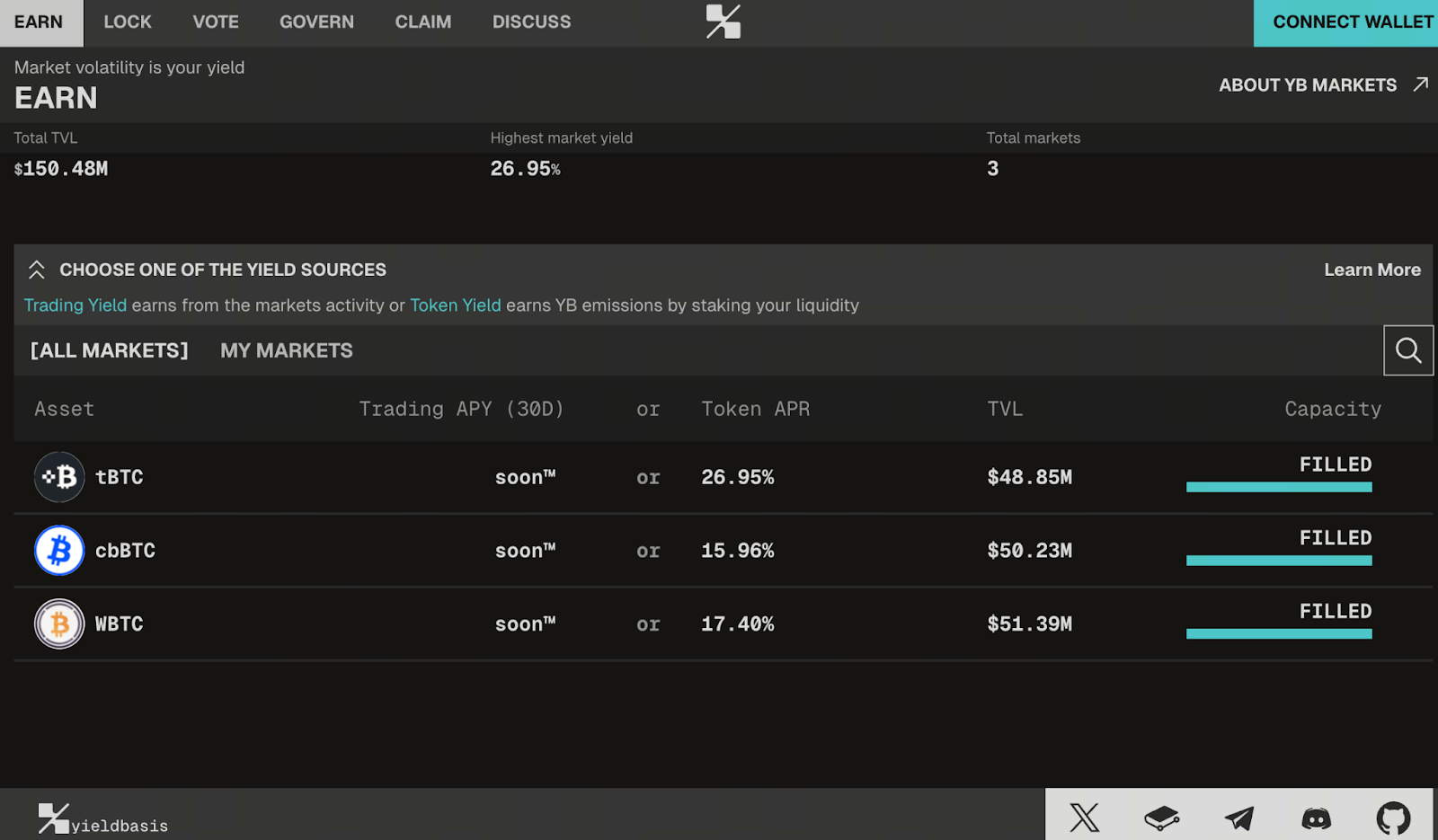
(Source : yieldbasis)
Yieldbasis est un protocole DeFi de nouvelle génération, créé par Michael Egorov, le fondateur de Curve Finance. Spécifiquement conçu pour les détenteurs de BTC et ETH sur le long terme, il propose un rendement stable et transparent grâce à une structure AMM automatisée à effet de levier. Les utilisateurs déposent leurs actifs dans des pools de liquidité et perçoivent des revenus issus des frais de transaction, sans s'exposer au risque de perte impermanente.
L'ensemble des opérations est automatisé par des smart contracts. Les utilisateurs n'ont qu'à déposer leurs actifs pour bénéficier de la distribution des rendements—il n'est pas nécessaire de gérer manuellement le levier ou les risques.
Modèle de liquidité à double effet de levier
L'innovation de Yieldbasis repose sur son mécanisme de « liquidité à effet de levier ». Cette structure applique un effet de levier 2×, permettant aux positions des fournisseurs de liquidité de suivre le prix du BTC à un ratio de 1:1, éliminant ainsi la dépréciation des actifs liée à la volatilité. Concrètement, cela offre aux utilisateurs :
- Absence totale de perte impermanente lors de la fourniture de liquidité ;
- Un revenu stable et régulier issu des frais de transaction ;
- La liberté de percevoir les récompenses directement ou de mettre en staking pour obtenir des incitations additionnelles en tokens, selon leur stratégie.
Aperçu du processus d'utilisation
Yieldbasis propose une expérience utilisateur fluide. Pour participer, il suffit de suivre ces étapes :
- Déposez votre BTC → frappez du ybBTC
- Le système emprunte automatiquement du crvUSD et l'injecte dans le pool Curve
- Les utilisateurs choisissent ensuite :
- Conserver le ybBTC pour recevoir directement le rendement des frais de trading BTC ;
- Ou mettre en staking le ybBTC pour percevoir des récompenses en tokens YB du protocole.
- Lors du retrait, brûlez le ybBTC. Le système clôture la position, rembourse la dette et restitue le BTC d'origine ainsi que le rendement accumulé.
Le processus est entièrement automatisé—une seule opération suffit pour bénéficier en continu du partage de rendement du protocole.
Structure du rendement et répartition des incitations
Yieldbasis génère principalement du rendement à partir des frais de trading du pool Curve BTC/crvUSD. Les récompenses sont attribuées en fonction de la participation des utilisateurs :
- Détenteurs de ybBTC non mis en staking : Reçoivent directement leur part des frais BTC, déduite des frais de gestion dynamiques—générant ainsi un profit pur.
- Utilisateurs ayant mis en staking le ybBTC : Renoncent au rendement immédiat en échange d'incitations en tokens YB et de droits de gouvernance.
- Détenteurs de veYB : Le verrouillage des tokens YB donne accès au partage des frais de gestion, ainsi qu'aux droits de vote et de gouvernance.
Le système distribue 50 % du rendement du pool aux participants ; les 50 % restants sont dédiés au rééquilibrage du protocole et à la liquidité, assurant un cycle de rendement autonome et durable.
Fonctions du token YB
Le token natif YB occupe une fonction centrale dans le protocole, articulée autour de trois missions principales :
- Gouvernance : Les utilisateurs votent sur les paramètres du protocole, la structure des frais et l’orientation des récompenses de liquidité.
- Distribution des frais : Les détenteurs de veYB reçoivent périodiquement une part des profits générés par le protocole.
- Récompenses liées au staking : Mettre en staking du ybBTC permet de percevoir régulièrement des distributions de tokens YB, encourageant la participation sur le long terme.
Structure de distribution du token
L'allocation du token YB vise à équilibrer les incitations communautaires, le développement de l’équipe et la croissance durable de l’écosystème, selon la répartition suivante :
- 30 % Incitations communautaires : Pour les fournisseurs de liquidité et les participants à la gouvernance.
- 25 % Équipe : Soutien au développement et à la maintenance du protocole.
- 15 % Réserve écosystème : Pour la collaboration cross-chain et l'intégration du protocole.
- 12,1 % Investisseurs : Récompense des premiers soutiens et partenaires stratégiques.
- 7,5 % Licence Curve Tech : Pour la licence de l’architecture sous-jacente.
- 7,4 % Réserve de développement du protocole : Soutien aux mises à jour et au développement de nouvelles fonctionnalités.
- 3 % Incitations au vote & à la liquidité : Renforcement de la gouvernance et de la participation au marché.
Ce modèle garantit une croissance pérenne du protocole, permettant à la fois à la communauté et aux utilisateurs de bénéficier pleinement de son succès.
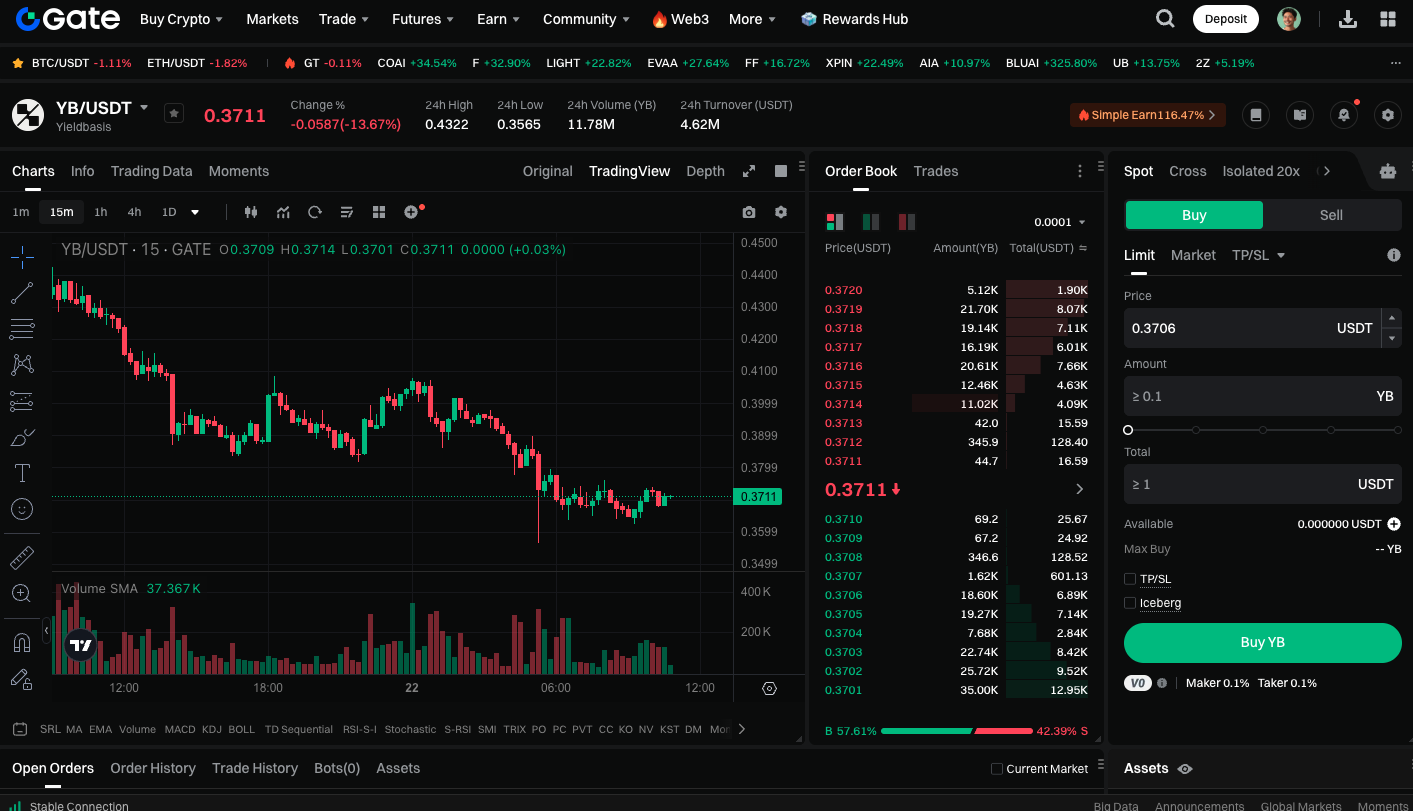
Commencez dès maintenant à négocier le YB au comptant : https://www.gate.com/zh-tw/trade/YB_USDT
Résumé
Yieldbasis propose un nouveau modèle de rendement passif au sein de l’écosystème DeFi, permettant aux détenteurs de BTC et ETH d’obtenir des revenus stables et durables, sans modifier leur exposition aux actifs. Ce modèle de rendement réel, fondé sur les frais de trading, remplace l’effet de levier risqué et les incitations inflationnistes, ouvrant ainsi une nouvelle ère du rendement décentralisé.