Seiring ekosistem blockchain berkembang pesat, berbagai public chain membangun jaringan aset independen—seperti BTC di jaringan Bitcoin, ETH di jaringan Ethereum, dan aset native di blockchain publik lainnya. Meskipun setiap aset memiliki nilai intrinsik, aset-aset tersebut tidak terhubung secara langsung. Akibatnya, pengguna biasanya mengandalkan exchange terpusat atau Bridge untuk melakukan swap aset.
Pendekatan ini menimbulkan masalah efisiensi dan keamanan. Platform terpusat meningkatkan risiko kustodian, sementara Bridge—karena kompleksitas teknis—sering menjadi sasaran pelanggaran keamanan. Pasar sangat membutuhkan solusi likuiditas cross-chain terdesentralisasi yang memungkinkan swap aset native secara langsung. THORChain hadir sebagai jawaban atas kebutuhan ini.
Apa Itu THORChain?
THORChain adalah protokol likuiditas cross-chain terdesentralisasi yang memungkinkan swap langsung aset native lintas blockchain berbeda. Dengan mekanisme Automated Market Maker (AMM) dan arsitektur pool likuiditas, THORChain memungkinkan pengguna melakukan Transaksi Cross-Chain antara aset seperti BTC dan ETH tanpa perantara.
Berbeda dari Bridge tradisional, THORChain tidak menggunakan aset wrapped. Sebagai gantinya, THORChain memakai RUNE sebagai perantara settlement untuk Perdagangan. Contohnya, saat pengguna menukar BTC ke ETH, protokol akan menukar BTC ke RUNE, lalu RUNE ke ETH—menyelesaikan Cross Chain Swap. Model ini mengurangi fragmentasi likuiditas sekaligus meningkatkan efisiensi Transaksi Cross-Chain.
Apa Kegunaan Token RUNE?
RUNE adalah token inti jaringan THORChain, berperan penting dalam settlement likuiditas, keamanan node, dan distribusi insentif di seluruh protokol. Karena semua pool likuiditas dipasangkan dengan RUNE, setiap Cross Chain Swap memerlukan RUNE sebagai perantara, sehingga pertumbuhan volume perdagangan protokol secara langsung meningkatkan permintaan RUNE.
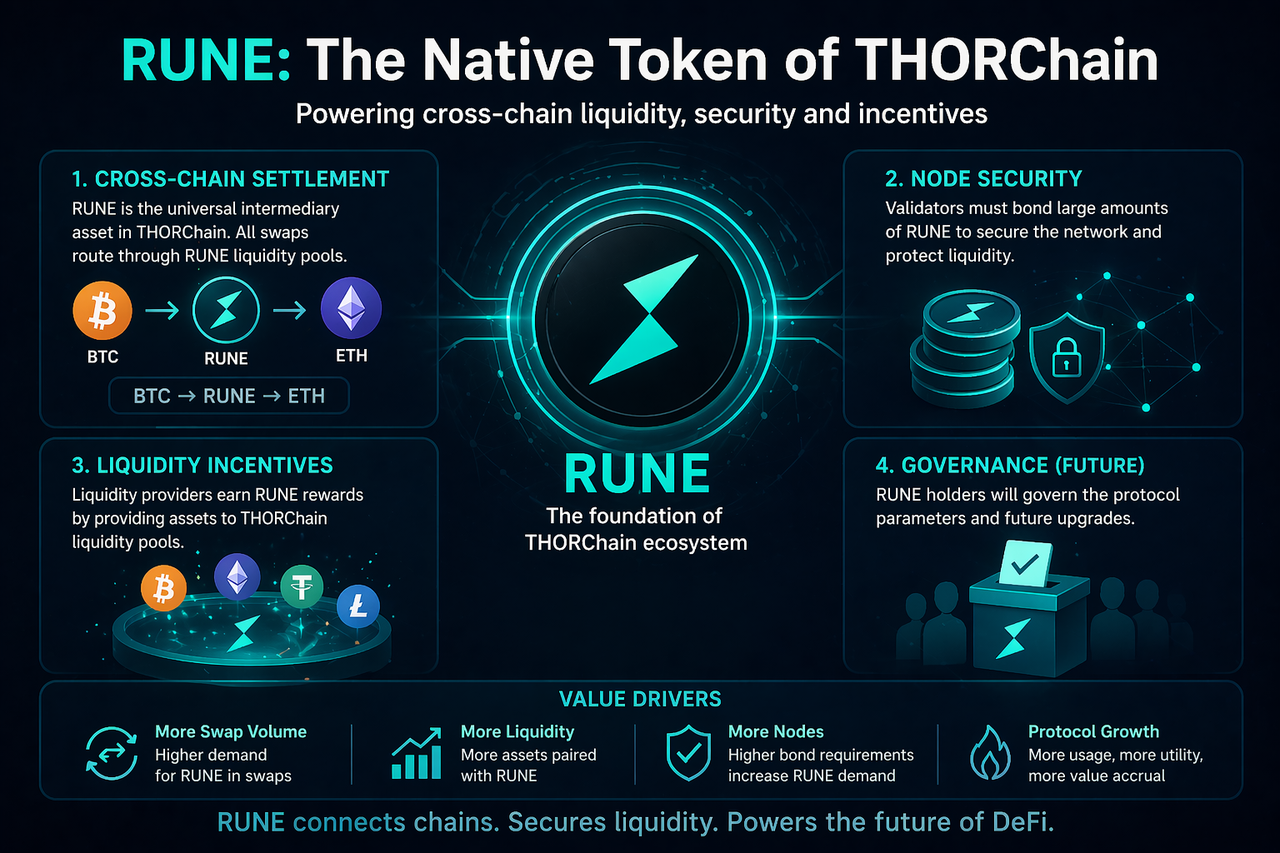
Selain settlement, RUNE juga digunakan untuk staking node. Validator harus Stake sejumlah RUNE tertentu untuk berpartisipasi dalam operasi jaringan, sehingga meningkatkan biaya perilaku jahat dan mengamankan Transaksi Cross-Chain. Selain itu, Penyedia Likuiditas memperoleh hadiah RUNE atas pasokan Aset, menjadikan RUNE pilar utama struktur insentif ekosistem.
Bagaimana THORChain Memungkinkan Transaksi Cross-Chain?
Transaksi Cross-Chain di THORChain berjalan berkat koordinasi pool likuiditas dan jaringan node. Saat pengguna mengajukan permintaan Cross Chain Swap, protokol akan menukar Aset input ke RUNE, lalu menukar RUNE ke Aset tujuan dari pool likuiditas chain tujuan. Model dual-swap ini menghilangkan kebutuhan pembuatan pool perdagangan khusus untuk setiap pasangan aset.
Untuk mendukung proses ini, arsitektur THORChain terdiri dari pool likuiditas, node validator, dan modul kustodi dana. Node memantau Perdagangan on-chain di berbagai blockchain dan memvalidasi status Aset, sementara pool dana menjamin likuiditas untuk swap Aset. Struktur ini memungkinkan pertukaran Aset cross-chain secara terdesentralisasi.
Arsitektur Teknis THORChain
Fondasi THORChain meliputi mekanisme konsensus, sistem manajemen dana, dan modul komunikasi cross-chain. Protokol ini mengandalkan mekanisme konsensus Tendermint untuk mengoordinasikan aktivitas node dan sistem Vault untuk mengelola dana lintas chain.
Selain itu, modul Bifröst menghubungkan THORChain ke jaringan blockchain eksternal, memungkinkan pemantauan Perdagangan on-chain dan verifikasi transfer Aset. Sinergi antar modul teknis ini memungkinkan THORChain menyediakan likuiditas aset native cross-chain tanpa bergantung pada kustodian terpusat.
Apa Kelebihan THORChain?
Keunggulan utama THORChain adalah kemampuannya memfasilitasi swap aset native cross-chain secara terdesentralisasi. Pengguna tidak perlu mengonversi BTC menjadi aset wrapped atau mempercayakan kustodi pada platform terpusat—mereka bisa langsung menukar Aset lintas chain, sehingga hambatan penggunaan cross-chain turun signifikan.
Model pool likuiditas juga meningkatkan efisiensi swap dan memusatkan pengelolaan likuiditas dalam lingkungan multi-chain. Desain ini memperbaiki pengalaman pengguna dan menjadi fondasi aplikasi DeFi cross-chain di masa depan, menjadikan THORChain pelopor infrastruktur likuiditas cross-chain.
THORChain vs. Bridge Tradisional: Perbandingan Native Cross-Chain Swap
THORChain dan Bridge tradisional berbeda secara fundamental dalam penanganan aset, model keamanan, dan skenario penggunaan. Bridge tradisional umumnya memindahkan Aset, sedangkan THORChain berfokus pada swap aset native terdesentralisasi, menawarkan pengalaman likuiditas cross-chain yang lebih baik.
| Dimensi Perbandingan |
THORChain |
Bridge Tradisional |
| Fungsi Inti |
Native asset cross-chain swap |
Transfer aset cross-chain |
| Jenis Aset |
Aset native |
Aset wrapped |
| Metode Swap |
Melalui pool likuiditas RUNE |
Mint aset mapped setelah lock |
| Kebutuhan Aset Wrapped |
Tidak diperlukan |
Diperlukan |
| Sumber Likuiditas |
Pool likuiditas terdesentralisasi |
Cadangan aset bridged |
| Mekanisme Keamanan |
Staking node + pool likuiditas |
Lock contract + mekanisme verifikasi |
| Risiko Utama |
Risiko node dan protokol |
Risiko serangan kontrak Bridge |
| Skenario Aplikasi |
Swap aset cross-chain |
Migrasi aset cross-chain |
| Pengalaman Pengguna |
Swap aset native langsung |
Bridge dulu, lalu perdagangan |
| Tingkat Desentralisasi |
Tinggi |
Bervariasi tergantung jenis bridge |
Kesimpulannya, THORChain memungkinkan swap aset native cross-chain sejati, menghilangkan kompleksitas aset wrapped dan mengurangi ketergantungan pada cadangan bridged. Untuk swap cross-chain, THORChain lebih unggul sebagai infrastruktur likuiditas dibanding Bridge tradisional.
Risiko dan Keterbatasan THORChain
Meski menawarkan keunggulan, THORChain tetap menghadapi risiko. Protokol cross-chain sangat kompleks, sehingga setiap celah kode dapat berdampak pada keamanan. Kedalaman likuiditas yang rendah juga dapat menyebabkan Slippage tinggi pada Perdagangan besar, memengaruhi pengalaman perdagangan.
Seiring meningkatnya persaingan infrastruktur cross-chain, THORChain juga menghadapi tekanan pasar dari protokol lain. Nilai jangka panjang RUNE bergantung pada kekuatan teknis, adopsi protokol secara berkelanjutan, dan pertumbuhan ekosistem.
Ringkasan
THORChain menghadirkan swap aset native cross-chain melalui pool likuiditas terdesentralisasi, menyediakan infrastruktur likuiditas utama untuk ekosistem multi-chain. RUNE menjadi inti protokol, mendukung settlement likuiditas, keamanan node, dan distribusi insentif.
Dengan meningkatnya permintaan cross-chain, nilai strategis THORChain dalam ekosistem DeFi pun bertambah. Bagi yang fokus pada infrastruktur cross-chain, THORChain adalah proyek yang patut diikuti, dan nilai jangka panjang RUNE sangat terkait dengan perkembangan protokol ke depan.
FAQ
Apa yang dilakukan THORChain?
THORChain adalah protokol likuiditas terdesentralisasi yang memungkinkan swap aset native cross-chain, sehingga pengguna dapat menukar aset langsung lintas blockchain.
Untuk apa RUNE digunakan?
RUNE digunakan untuk settlement transaksi cross-chain, staking node, dan insentif likuiditas. RUNE adalah token inti yang menjalankan operasional protokol THORChain.
Apakah THORChain memerlukan aset wrapped?
Tidak. THORChain mendukung swap langsung antar aset native—tidak perlu melakukan wrapping aset.
Apakah RUNE memiliki nilai jangka panjang?
Nilai jangka panjang RUNE didorong oleh pertumbuhan transaksi cross-chain, permintaan staking node, dan ekspansi likuiditas protokol.