The importance of Microsoft’s business model lies in its gradual shift from a traditional PC software company into a cloud computing and AI platform enterprise. Azure data centers, the OpenAI partnership, and Copilot products are transforming Microsoft’s revenue mix and enterprise service model.
MSFT’s current business scope spans operating systems, enterprise software, AI cloud services, developer tools, search advertising, and data center infrastructure. AI model training, enterprise-grade AI productivity tools, and cloud computing services are increasingly becoming key growth engines for Microsoft.
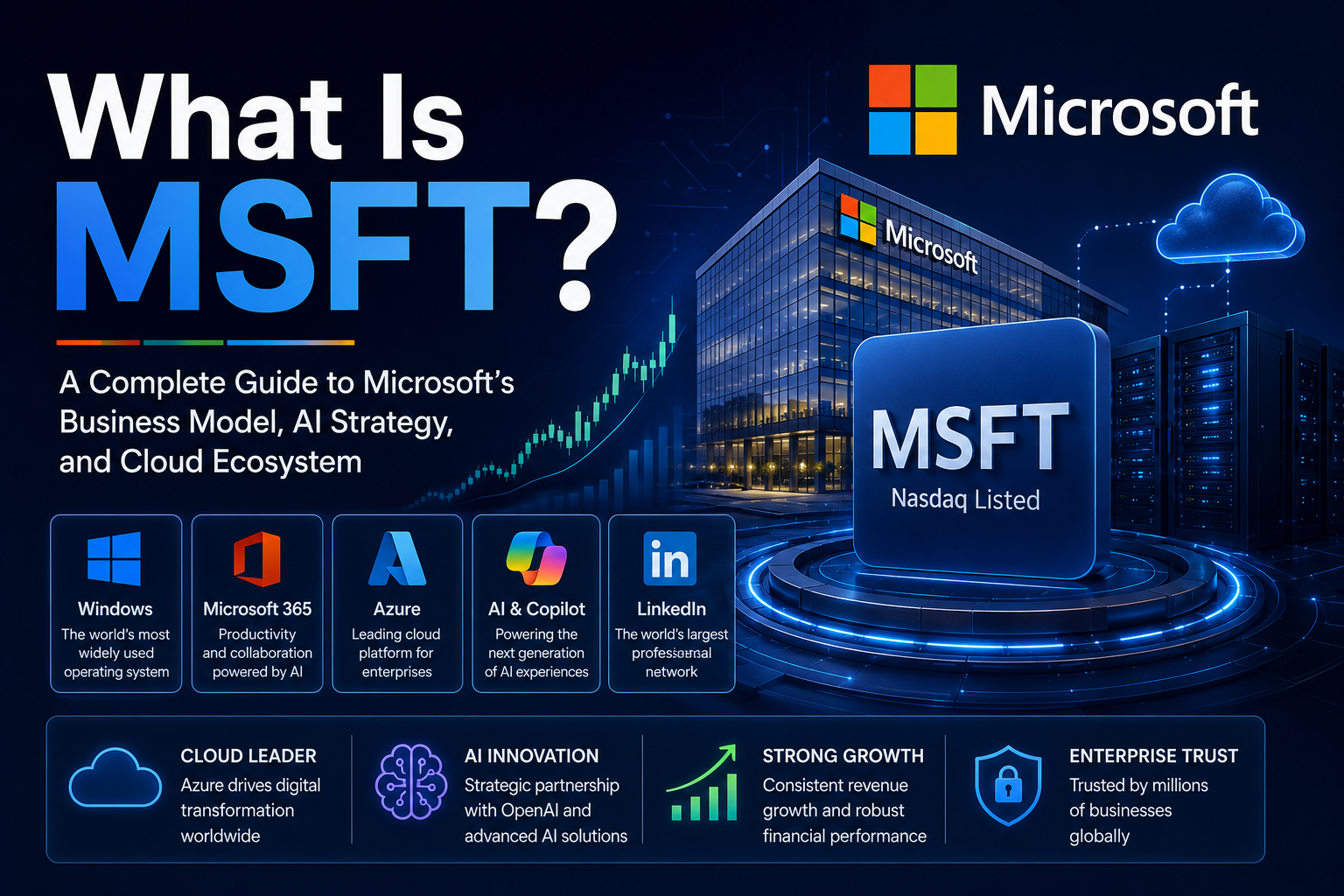
What Is MSFT
Microsoft’s core focus is on building a long-term enterprise ecosystem through software, cloud computing, and AI services. Windows and Office have long served as the bedrock of Microsoft’s business, while Azure and the AI platform are propelling Microsoft into a new phase of growth.
Structurally, Microsoft is better described as an “enterprise digital infrastructure platform.” Enterprise users typically adopt Windows, Microsoft 365, Teams, and Azure together, creating a comprehensive collaboration ecosystem.
Microsoft’s business currently covers:
-
Windows operating system
-
Microsoft 365
-
Azure cloud services
-
AI and Copilot
-
LinkedIn and advertising
Microsoft’s long-term competitive edge comes primarily from its ecosystem integration capabilities. The synergy between enterprise software, cloud computing, and AI services also enables Microsoft to maintain high customer stickiness.
How the Microsoft Business Model Works
The Microsoft business model is built on a “subscription + cloud services + enterprise ecosystem” structure. Instead of relying on one-time software sales, Microsoft has progressively transitioned to a recurring subscription revenue model.
First, enterprise users purchase Windows and Microsoft 365 services. Then, corporate data, collaboration tools, and office workflows gradually migrate into the Microsoft ecosystem.
Next, Azure provides cloud computing, database, and AI model training services. Enterprises can manage data centers, AI applications, and cloud infrastructure through Azure.
Finally, Microsoft generates ongoing revenue through long-term subscriptions and cloud services. Microsoft 365, Azure, and enterprise security offerings have become Microsoft’s most important cash flow drivers.
| Business Segment |
Core Product |
Primary Revenue Model |
| Operating System |
Windows |
Licensing Revenue |
| Office Software |
Microsoft 365 |
Subscription Revenue |
| Cloud Computing |
Azure |
Cloud Service Revenue |
| AI Services |
Copilot |
AI Subscription Revenue |
| Enterprise Collaboration |
Teams |
SaaS Revenue |
The key to Microsoft’s business model is creating a unified enterprise platform through multiple products. The more deeply enterprises rely on the Microsoft ecosystem, the higher the switching costs typically become.
Microsoft Azure’s Role in the Cloud Computing Market
Azure is Microsoft’s cloud computing platform and one of the largest cloud service networks in the world. Azure primarily delivers computing, storage, databases, AI, and data center services to enterprises.
First, enterprises migrate applications and data into the Azure cloud environment. Then, Azure provides server, database, and network resource support.
Next, Azure AI services support AI model training and inference. Large language models require massive GPU and data center resources, making Azure a critical platform for AI infrastructure.
Unlike traditional on-premises server setups, Azure allows enterprises to rapidly scale computing resources without building large data centers themselves.
The strength of Microsoft’s cloud computing ecosystem lies in Azure’s deep integration with Windows, Office, and enterprise security. A unified platform reduces the complexity of enterprise IT management.
How Microsoft Is Positioning in AI and the OpenAI Ecosystem
The core of Microsoft’s AI strategy revolves around Azure AI infrastructure and the OpenAI partnership. Microsoft has been steadily integrating AI model capabilities into Office, Windows, and enterprise services.
First, Microsoft supplies Azure data center and GPU computing power to OpenAI. Since large-scale AI model training demands enormous computing resources, Azure has become a key infrastructure platform for OpenAI.
Subsequently, Microsoft embeds GPT model capabilities into Copilot products. Microsoft 365 Copilot, GitHub Copilot, and Windows AI features all run on Microsoft’s AI platform.
Then, Azure OpenAI Services provides enterprise customers with access to AI model APIs. Enterprises can build customer service, search, and automation AI systems through Azure.
Microsoft’s AI strategy emphasizes “AI + enterprise software” integration. Rather than simply competing on AI models, Microsoft prioritizes enterprise-grade AI deployment and practical application.
What Core Businesses Does MSFT Have in Enterprise Software
Microsoft’s enterprise software business spans office collaboration, enterprise security, developer tools, and data management. This ecosystem has long been Microsoft’s core competitive advantage.
First, Microsoft 365 provides office productivity, email, and collaboration tools. Enterprises can establish a unified work environment through Teams, Excel, and Outlook.
Then, Microsoft strengthens enterprise management capabilities with Active Directory, Defender, and security services. Large enterprises typically require unified identity management and network security systems.
Next, GitHub and developer platforms support software development collaboration. Microsoft has built an integrated enterprise ecosystem of “office + development + cloud computing.”
The importance of Microsoft’s enterprise software model lies in the stability of long-term subscription revenue. Enterprise customers tend to remain loyal to Microsoft’s office and security platforms.
How Microsoft Builds Its Ecosystem Through Office and Windows
The core of Microsoft’s ecosystem is the long-standing synergy between Windows and Office. Together, the operating system and office software have created one of the world’s largest enterprise software infrastructures.
First, Windows provides the runtime environment for PCs and enterprise endpoints. Then, Microsoft Office handles productivity, documentation, and collaboration tasks.
Next, Teams and OneDrive integrate cloud-based collaboration capabilities. Employees can share files, hold remote meetings, and synchronize data through the Microsoft platform.
Microsoft’s ecosystem differs from traditional software models. Instead of selling individual software products, Microsoft emphasizes a unified “device + cloud + AI” experience.
AI features are also gradually making their way into Office and Windows. Copilot can now assist users with document creation, code generation, and data analysis.
How to Trade MSFT on Gate TradFi
Gate TradFi allows users to access traditional financial assets like MSFT through related TradFi products. Users can monitor Microsoft stock price performance on Gate TradFi and trade based on the product types offered on the platform.
MSFT-related TradFi products generally track Microsoft stock price movements. Unlike directly holding shares, some TradFi products focus on price difference trading, so users need to understand product rules, leverage mechanisms, and risk control methods.
When trading MSFT on Gate TradFi, users typically need to enter the TradFi Zones, then search for MSFT or Microsoft-related products. They can then view product details, price trends, trading rules, and risk reminders.
MSFT prices are typically influenced by Azure growth, AI commercialization, enterprise software revenue, data center capital expenditure, and sentiment in the U.S. tech stock sector. Before trading MSFT-related products, users should understand Microsoft’s fundamentals and TradFi product mechanics.
How MSFT Differs From Apple and Google
Microsoft, Apple, and Google are all global tech giants, but their business models differ significantly. Microsoft places greater emphasis on enterprise software and cloud computing ecosystems.
| Company |
Core Direction |
Main Advantage |
| Microsoft |
Enterprise Software & Cloud Computing |
Azure & Office |
| Apple |
Hardware Ecosystem |
iPhone & Chips |
| Google |
Search & Advertising |
Search & AI Models |
Apple focuses on consumer electronics and hardware integration. Google relies mainly on search advertising and internet services.
By contrast, Microsoft has long concentrated on the enterprise market. Azure, Microsoft 365, and AI enterprise services have become Microsoft’s most important growth engines.
The AI competition between Microsoft and Google is also primarily centered on cloud computing and enterprise AI platform markets.
What Competitive Challenges Does Microsoft Face in AI and Cloud Computing
The main challenges Microsoft faces in its AI and cloud computing businesses revolve around GPU supply, AI model competition, and global cloud computing market pressures.
First, AI model training requires massive GPU and data center resources. NVIDIA’s GPU supply capacity directly affects how fast Azure AI services can scale.
Then, Google, Amazon, and Meta are all intensifying their AI platform competition. Major tech firms are vying for the enterprise AI services market.
Next, global data center expansion raises capital expenditure pressure. AI data centers demand significant energy, cooling systems, and high-performance networking resources.
Microsoft also needs to carefully balance AI costs with commercialization efficiency. While generative AI enhances enterprise service capabilities, AI inference costs remain high.
Global AI and cloud computing competition has shifted from pure software competition to a comprehensive contest involving data centers, GPUs, and AI platforms.
Summary
MSFT is the stock ticker for Microsoft Corporation, which has evolved from a traditional software company into a global AI and cloud computing infrastructure powerhouse. Windows, Office, Azure, and the OpenAI ecosystem together form the foundation of Microsoft’s long-term business model.
The Azure cloud platform, Copilot AI services, and enterprise software ecosystem are driving Microsoft into its next growth phase. Microsoft is now a major player in the global enterprise AI services and cloud computing markets.
At the same time, Microsoft faces challenges from AI model competition, data center costs, and cloud computing market pressures. The global AI infrastructure race is emerging as a central theme in Microsoft’s future development.
FAQ
What Is MSFT?
MSFT is the stock ticker for Microsoft Corporation. Microsoft primarily operates Windows, Office, Azure, AI services, and enterprise software businesses.
What Is Microsoft Azure?
Azure is Microsoft’s cloud computing platform, offering servers, databases, AI model training, and enterprise cloud services. It is one of the leading cloud platforms in the world.
Why Does Microsoft Prioritize AI?
Microsoft’s AI strategy focuses on Azure data centers and its OpenAI partnership. AI services strengthen the enterprise software ecosystem and drive cloud computing revenue growth.
What Is the Relationship Between Microsoft and OpenAI?
Microsoft provides Azure cloud computing and GPU power to OpenAI and integrates GPT models into Copilot and Azure AI services.
How to Trade MSFT on Gate TradFi?
Users can search for MSFT or Microsoft-related products in the Gate TradFi Zones and trade according to the platform’s product rules. MSFT-related products are typically influenced by Microsoft’s earnings, Azure growth, AI business, and U.S. tech stock sector trends.
What Are the Differences Between MSFT, Apple, and Google?
Microsoft focuses on enterprise software and cloud computing, Apple emphasizes hardware ecosystems, and Google relies more on search advertising and internet services.