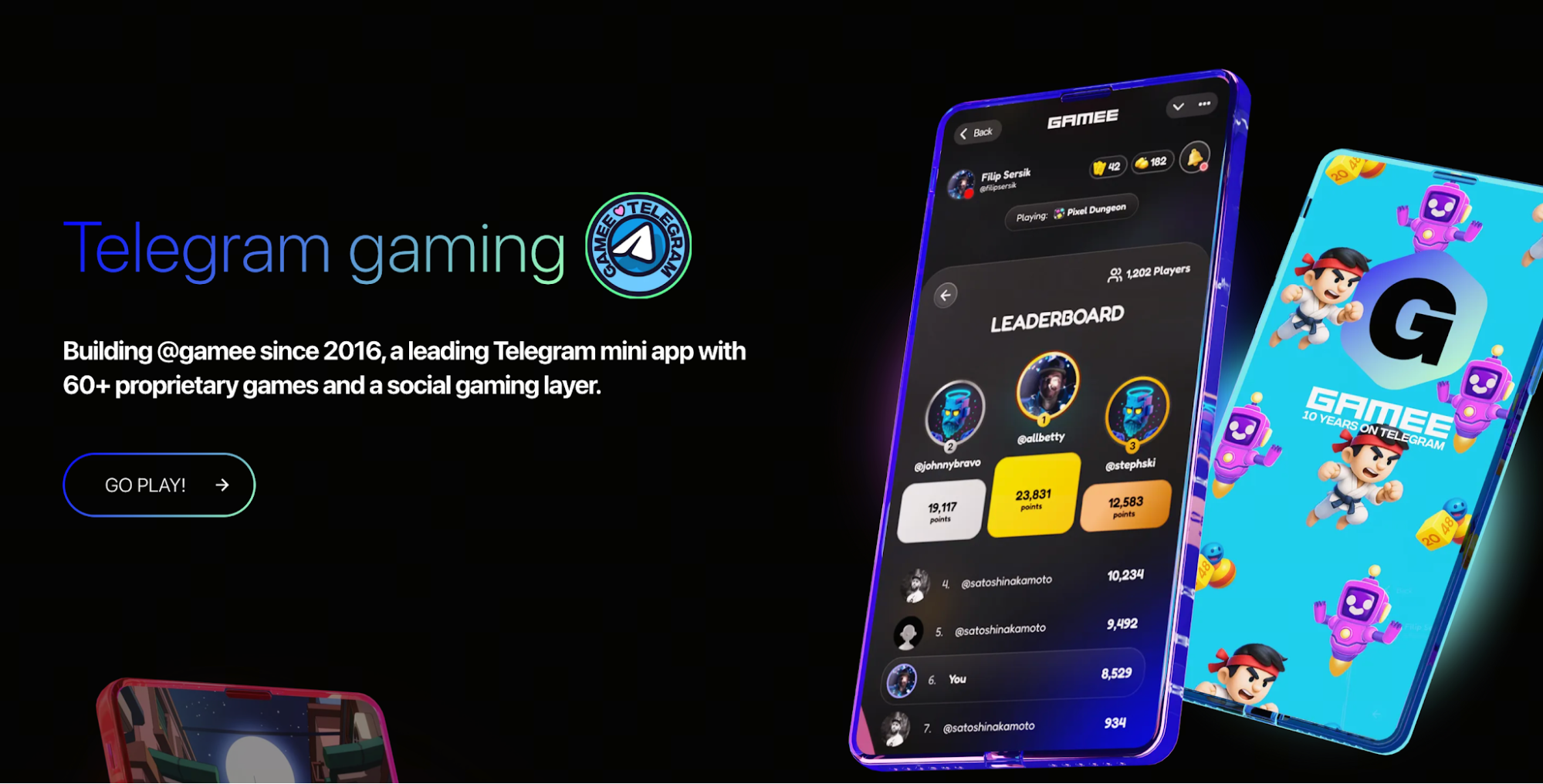
GAMEE (GMEE) là nền tảng trò chơi Blockchain sử dụng token GMEE để cung cấp phần thưởng, mua hàng trong trò chơi và tham gia các trò chơi Chơi để kiếm tiền. Đến năm 2025, GAMEE đã phát triển lên 103 triệu người dùng, tích hợp chức năng chuỗi chéo nâng cao, bổ sung các trò chơi mới như Realm Wars và Crypto Legends, giảm phí giao dịch 65%, đồng thời thiết lập các quan hệ đối tác chiến lược với các studio trò chơi lớn và tổ chức thể thao điện tử.
GAMEE là một nền tảng gaming casual kết nối người dùng Telegram, người chơi di động, dự án Web3 và các thương hiệu tiêu dùng thông qua các trò chơi giải trí. Các sản phẩm chính bao gồm GAMEE Telegram, nền tảng gaming di động Arc8, game di động miễn phí, GAMEE Web3 AdNetwork và các trải nghiệm gaming dựa trên tài sản số khác.
GMEE là token tiện ích của hệ sinh thái GAMEE. Token này được sử dụng để truy cập các tính năng game chọn lọc, tham gia chiến dịch hệ sinh thái, và mua inventory quảng cáo hoặc thu hút người dùng qua GAMEE Web3 AdNetwork. GMEE không phải là tài sản thưởng mặc định cho mọi trò chơi GAMEE, vì một số chiến dịch sẽ phân phối token đối tác, stablecoin, NFT hoặc các phần thưởng số khác.
Theo số liệu hiện tại từ GAMEE, hệ sinh thái này đã đạt khoảng 120 triệu người dùng đăng ký, ghi nhận hơn 10 tỷ lượt chơi, kết nối hơn 6,5 triệu ví và tạo ra khoảng 2 tỷ lượt hiển thị mỗi tháng. GAMEE cũng vận hành một Telegram Mini App với hơn 60 trò chơi nội bộ và tiếp tục mở rộng qua gaming casual, tài sản trí tuệ thương hiệu và các chiến dịch Web3.
Nền tảng gaming GAMEE (GMEE) là gì?
GAMEE là nền tảng gaming casual kết nối người dùng Telegram, người chơi di động, người tham gia Web3, dự án tiền điện tử và các thương hiệu tiêu dùng thông qua các sản phẩm như GAMEE Telegram, Arc8, game di động miễn phí và Web3 AdNetwork, với GMEE là token tiện ích. Được thành lập năm 2015 với vai trò công ty gaming casual di động và xã hội, GAMEE đã mở rộng sang Web3 bằng việc tích hợp ví, token, NFT, phần thưởng cộng đồng và hợp tác thương hiệu. GAMEE không phải một trò chơi blockchain duy nhất mà là hệ sinh thái sản phẩm game, kênh phân phối và công cụ thương mại xây dựng quanh trải nghiệm xã hội và cạnh tranh.
Nền tảng này sử dụng các trò chơi casual dễ tiếp cận để thu hút người dùng trước khi giới thiệu các tính năng Web3 tùy chọn. Người chơi có thể truy cập game qua ứng dụng di động và Telegram, cạnh tranh nhận thưởng và tương tác với hệ thống kết hợp gameplay casual với tiện ích token. Các dự án tiền điện tử và thương hiệu có thể tận dụng lượng người dùng này cho các cuộc thi tài trợ, nhiệm vụ, phần thưởng và chiến dịch quảng cáo, giúp GAMEE không chỉ phù hợp với người chơi mà còn với đội nhóm khám phá gamification và tương tác Web3. Bài viết này giải thích cách các sản phẩm cốt lõi của GAMEE hoạt động, bao gồm game Telegram, Arc8, game di động miễn phí và Web3 AdNetwork, cùng với mô hình gameplay & phần thưởng, mô hình kinh doanh và vai trò trong lĩnh vực gaming casual và Web3.
GMEE là token tiện ích được sử dụng trên nhiều phần của hệ sinh thái. GMEE hỗ trợ các giao dịch mua chọn lọc, truy cập chiến dịch, hoạt động đối tác và dịch vụ quảng cáo. Hướng dẫn này cũng phân tích tiện ích, nguồn cung và tokenomics của GMEE. Việc nắm giữ GMEE không mang lại quyền sở hữu GAMEE, quyền hưởng lợi nhuận công ty hoặc lợi nhuận đảm bảo. Bạn cũng sẽ thấy cách các chiến dịch đối tác và diễn biến gần đây của công ty phù hợp với nền tảng nếu bạn là người chơi casual, người dùng Telegram, người chơi di động, người dùng token, người tham gia dự án tiền điện tử hoặc thương hiệu đang khám phá marketing gamification.
Tính đến năm 2026, GAMEE duy trì quan hệ doanh nghiệp và hệ sinh thái với Alpha Compute Corp và Animoca Brands. Quan hệ kinh doanh này cần được phân biệt với token GMEE: các diễn biến về quyền sở hữu hoặc cấu trúc doanh nghiệp GAMEE không tự động mang lại quyền cổ đông cho người nắm giữ GMEE, và công ty đã hợp tác với hơn 120 thương hiệu, tổ chức.
GAMEE hoạt động như thế nào? Cấu trúc nền tảng và ứng dụng Arc8
GAMEE kết nối người chơi, thương hiệu và dự án tiền điện tử thông qua game Telegram, game di động miễn phí, Arc8 và GAMEE Web3 AdNetwork. Các sản phẩm này phục vụ các nhóm đối tượng khác nhau và dùng các mô hình kinh doanh riêng biệt, nhưng tất cả đều dựa vào trò chơi casual và tương tác người dùng.
Với người chơi, GAMEE hướng tới trải nghiệm gần giống gaming di động truyền thống. Người dùng có thể chơi game, tham gia bảng xếp hạng và hoàn thành nhiệm vụ trước khi kết nối ví hoặc sử dụng token, NFT. Tính năng blockchain là lớp bổ sung tùy chọn, không bắt buộc với tất cả người dùng.
Với đối tác, GAMEE cung cấp kênh thu hút người dùng dạng gamification. Thương hiệu và dự án Web3 có thể tài trợ cuộc thi, phát động nhiệm vụ, cung cấp phần thưởng hoặc mua quảng cáo, giúp quảng bá sản phẩm trở thành một phần của trải nghiệm game.
Ứng dụng Arc8
Arc8 là nền tảng gaming di động cạnh tranh của GAMEE trên iOS và Android. Ứng dụng cung cấp trò chơi casual dựa trên kỹ năng, giải đấu, bảng xếp hạng và sự kiện tài trợ. Một số chiến dịch chọn lọc thưởng token, NFT hoặc tài sản số cho người tham gia.
Arc8 tích hợp ví và tài sản số vào giao diện gaming di động. Người dùng có thể xem token hoặc NFT hỗ trợ và chuyển tài sản đủ điều kiện vào/ra ví cá nhân khi chức năng và mạng lưới liên quan sẵn sàng.
Theo GAMEE, Arc8 cung cấp hơn 10 trò chơi, có trên 200.000 người chơi hoạt động hàng tháng và xếp hạng trung bình app store khoảng 4,7. Các số liệu này có thể thay đổi, và game, phạm vi chiến dịch, quy tắc phần thưởng cần kiểm tra trên giao diện Arc8 hiện tại.
Phần thưởng Arc8 không phải lúc nào cũng trả bằng GMEE. Một số cuộc thi và chiến dịch GameFest do dự án bên ngoài tài trợ và có thể phân phối token đối tác, stablecoin, NFT hoặc tài sản trong game.
Token GMEE là gì?
GMEE là token tiện ích của hệ sinh thái GAMEE. Token này kết nối các tính năng game, chiến dịch đối tác, inventory quảng cáo và ưu đãi hệ sinh thái. GMEE ban đầu phát hành dưới dạng token ERC-20 và mở rộng sang các blockchain khác, gồm Polygon.
Tổng nguồn cung tối đa của GMEE là 3.180.000.000 token. Vốn hóa thị trường hiện tại là 35.863.092 USD, con số này có thể thay đổi. Nguồn cung tối đa là giới hạn toàn hệ sinh thái và không nên nhầm với nguồn cung lưu thông. Số token khả dụng thị trường thay đổi do phát hành, chi tiêu kho quỹ, phân bổ hệ sinh thái và di chuyển chuỗi chéo.
Một vai trò hiện tại của GMEE là cung cấp quyền truy cập và thanh toán trong GAMEE Web3 AdNetwork. GAMEE mô tả token như phương tiện kết nối sự chú ý người dùng với inventory quảng cáo số. Đối tác có thể mua hoặc sử dụng GMEE để truy cập vị trí quảng cáo hoặc phát động chiến dịch hệ sinh thái.
Khi chuyển GMEE trên chuỗi, người dùng không nên giả định mọi ví, ứng dụng hoặc sàn giao dịch đều hỗ trợ toàn bộ mạng lưới. Blockchain, hợp đồng token và địa chỉ nhận cần phải trùng khớp hoàn toàn.
GMEE được dùng để làm gì?
GMEE được dùng cho các tính năng game chọn lọc, hoạt động đối tác, inventory quảng cáo, tham gia cộng đồng và ưu đãi hệ sinh thái. Mức độ khả dụng phụ thuộc vào sản phẩm GAMEE, chiến dịch Arc8 hoặc chương trình đối tác liên quan.
Người chơi có thể dùng GMEE để truy cập một số tính năng, mua vật phẩm số, tham gia cuộc thi chọn lọc hoặc tham gia chiến dịch hệ sinh thái cụ thể. Các trường hợp sử dụng trước đây gồm game pass, vé giải đấu và mua tài sản số liên quan.
Thương hiệu và dự án Web3 có thể dùng GMEE mua inventory quảng cáo qua GAMEE Web3 AdNetwork hoặc hỗ trợ game tùy chỉnh, nhiệm vụ và chiến dịch phần thưởng. Trong mô hình này, GMEE là tài sản truy cập và thanh toán cho dịch vụ marketing gamification.
Dự án đối tác cũng có thể phân phối token, NFT hoặc phần thưởng riêng cho người dùng GAMEE. Vì vậy, GMEE hoạt động như tài sản truy cập hệ sinh thái và thương mại hơn là token thưởng bắt buộc cho mọi trò chơi.
Một số chương trình trao đổi bên thứ ba cũng cho phép stake BGB để nhận GMEE trong Launchpool cho ai muốn tham gia sự kiện phân phối bên ngoài. GAMEE cũng từng mua GMEE trên thị trường mở. Những giao dịch này có thể tạo thêm nhu cầu, nhưng mua lại không đồng nghĩa với đốt token. Token giữ trong kho quỹ vẫn tồn tại và có thể dùng cho phát triển hệ sinh thái hoặc mục đích khác về sau.
Các sản phẩm nào thuộc hệ sinh thái GAMEE dành cho người dùng gaming đại chúng?
Hệ sinh thái GAMEE gồm game Telegram, game di động miễn phí, Arc8, Web3 AdNetwork và các dự án ươm tạo như WatBird.
Sản phẩm hệ sinh thái
Định vị chính
Chức năng điển hình
GAMEE Telegram
Điểm vào gaming casual xã hội
Mini-game, nhiệm vụ, bảng xếp hạng, chiến dịch lớn
Arc8
Nền tảng gaming di động cạnh tranh
Giải đấu, sự kiện đối tác, token, NFT
Game di động miễn phí
Gaming casual đại chúng
Chơi miễn phí, quảng cáo, chiến dịch phần thưởng
Web3 AdNetwork
Quảng bá thương hiệu, dự án
Quảng cáo gamification, nhiệm vụ, thu hút người dùng
WatBird
Tài sản trí tuệ gaming trên nền TON
Game Telegram, điểm, hoạt động cộng đồng
Game GAMEE trên Telegram
GAMEE vận hành một Telegram Mini App với hơn 60 trò chơi nội bộ và tính năng xã hội. Người dùng có thể truy cập mini-game, bảng xếp hạng, nhiệm vụ và chiến dịch giới hạn thời gian ngay trong Telegram mà không cần cài ứng dụng gaming riêng biệt.
Số liệu khác của GAMEE cho thấy cộng đồng gaming trên Telegram đạt hơn 55 triệu người dùng và tạo hơn 200 triệu lượt chơi trên 50+ trò chơi casual. Sự khác biệt giữa số liệu chính thức có thể do ngày báo cáo hoặc phương pháp đo khác nhau.
Telegram giảm rào cản tham gia, nhưng người dùng đăng ký không đồng nghĩa người dùng hoạt động liên tục. Số liệu về hoạt động hàng tháng, giữ chân chiến dịch và lượt chơi lặp lại cung cấp đánh giá hữu ích hơn về mức độ tương tác thực tế.
Game di động miễn phí
GAMEE cũng cung cấp trò chơi casual miễn phí cho iOS và Android. Sản phẩm này thường dùng mô hình kinh doanh dựa trên quảng cáo và không yêu cầu mua NFT hoặc token trước khi chơi.
Cách tiếp cận này khác mô hình chơi để kiếm tiền trước đây vốn phụ thuộc nhiều vào ưu đãi token. Giải trí và giữ chân người dùng vẫn là trải nghiệm chính, còn ví và phần thưởng số chỉ là tiện ích mở rộng tùy chọn.
Arc8
Arc8 tập trung vào game di động cạnh tranh, giải đấu và sự kiện tài trợ. Người dùng có thể tham gia nhiều định dạng game khác nhau và nhận phần thưởng số khi có quy tắc chiến dịch cụ thể áp dụng.
Arc8 cũng giúp giới thiệu tính năng Web3 cho người dùng Web2. Ví, token và NFT tích hợp vào môi trường gaming di động quen thuộc thay vì tách rời như sản phẩm kỹ thuật độc lập.
GAMEE Web3 AdNetwork và inventory quảng cáo
Web3 AdNetwork là phần quan trọng trong mô hình kinh doanh hiện tại của GAMEE. Thương hiệu và dự án tiền điện tử có thể sử dụng quảng cáo gamification, nhiệm vụ, chiến dịch phần thưởng và sự kiện cộng đồng để tiếp cận người dùng GAMEE.
GAMEE báo cáo hệ sinh thái tạo khoảng 2 tỷ lượt hiển thị mỗi tháng. GMEE được dùng để truy cập và thanh toán cho một số dịch vụ quảng cáo, nên nhu cầu đối tác có thể chuyển hóa thành tiện ích token.
Tuy nhiên, số lượt hiển thị không phản ánh trực tiếp doanh thu quảng cáo hay khối lượng mua GMEE. Hiệu quả thương mại phụ thuộc vào nhu cầu khách hàng, giá chiến dịch, tỷ lệ chuyển đổi người dùng và tỷ trọng dịch vụ thực tế thanh toán bằng GMEE.
WatBird và hệ sinh thái WAT
WatBird là tài sản trí tuệ gaming do GAMEE phát triển trên hệ sinh thái TON. WatBird đã dùng game Telegram, WatPoints và các chiến dịch liên quan để thu hút người dùng cộng đồng.
WAT và GMEE là hai token tách biệt với mô hình nguồn cung, mục đích sử dụng và quy tắc hệ sinh thái khác nhau. Người dùng cần xác minh tên tài sản, mạng lưới, địa chỉ hợp đồng và điều kiện chiến dịch từng token độc lập.
Nguồn cung token GMEE được phân bổ như thế nào?
GMEE có tổng nguồn cung tối đa 3,18 tỷ token. Phân bổ bao gồm vận hành game, dự trữ công ty, đội ngũ & cố vấn, đối tác chiến lược, thanh khoản và một số hạng mục gây quỹ.
Danh mục phân bổ
Tỷ trọng trên tổng nguồn cung
Vận hành game
25,28%
Dự trữ công ty
20,57%
Đội ngũ & cố vấn
20,00%
Đối tác chiến lược
12,55%
Pool thanh khoản
11,79%
Bán chiến lược
5,85%
Bán riêng
2,86%
Cộng đồng
0,94%
Bán trước công khai
0,16%
Tổng
100%
Vận hành game, dự trữ công ty và đội ngũ & cố vấn chiếm tổng cộng 65,85% tổng nguồn cung. Các khoản này phục vụ phát triển sản phẩm, vận hành dài hạn và chi tiêu hệ sinh thái, nhưng lịch phát hành và cách sử dụng cũng ảnh hưởng tới nguồn cung lưu thông.
Đối tác chiến lược và pool thanh khoản chiếm tổng cộng 24,34%. Các hạng mục này nhằm hỗ trợ mở rộng hệ sinh thái và thanh khoản thị trường. Phân bổ cho nhà đầu tư nhỏ hơn, nhưng lịch mở khóa vẫn có thể tác động cung cầu giai đoạn nhất định.
Vì vậy, phân tích nguồn cung GMEE cần xem xét nhiều yếu tố ngoài nguồn cung tối đa và tỷ lệ phân bổ. Các yếu tố liên quan gồm nguồn cung lưu thông hiện tại, số dư kho quỹ, phát hành token, cách sử dụng token mua lại và việc thống kê chính xác nguồn cung chuỗi chéo.
Người dùng có thể giữ và giao dịch GMEE như thế nào?
Người dùng có thể nhận GMEE qua các sàn giao dịch tập trung hỗ trợ hoặc thị trường phi tập trung. Để giao dịch GMEE trên Gate, người dùng cần đăng ký, đăng nhập, hoàn thành xác minh tài khoản hoặc khu vực nếu cần và chuẩn bị tài sản giao ngay liên quan.
Trên thị trường giao ngay Gate, người dùng tìm “GMEE” và chọn cặp giao dịch khả dụng. Lệnh thị trường tìm khớp lệnh ngay theo giá trên sổ lệnh nhưng có thể gặp trượt giá. Lệnh giới hạn cho phép đặt giá mục tiêu nhưng không đảm bảo khớp ngay hoặc đầy đủ.
Sau khi lệnh được thực hiện, GMEE sẽ xuất hiện trong số dư tài khoản người dùng. Token này có thể giữ hoặc bán trên thị trường giao ngay liên quan.
Với nạp và rút GMEE, người dùng nên dựa vào các mạng lưới hiện hiển thị trên trang tài sản Gate. Việc GMEE tồn tại trên nhiều blockchain không đồng nghĩa mọi mạng đều được nền tảng hỗ trợ. Mạng gửi, mạng nhận, địa chỉ và hợp đồng token phải trùng khớp.
Đâu là điểm mạnh và rủi ro chính của GMEE?
Các điểm mạnh tiềm năng của GMEE đến từ tập người dùng gaming casual lớn của GAMEE, phân phối qua Telegram, Arc8, chiến dịch đối tác và Web3 AdNetwork. Khác với token chỉ dùng làm phần thưởng trong game, GMEE còn hỗ trợ truy cập quảng cáo và dịch vụ thu hút người dùng.
GAMEE báo cáo có 120 triệu người dùng đăng ký, 10 tỷ lượt chơi tích lũy và 2 tỷ lượt hiển thị hàng tháng, đem lại lượng người dùng tiềm năng lớn cho marketing gamification và chiến dịch thương hiệu.
Tuy nhiên, người dùng đăng ký và lượt chơi tích lũy không phản ánh trực tiếp lượng người dùng hoạt động hiện tại hoặc doanh thu ổn định. Đối tượng gaming casual biến động cao, và mức độ tham gia các chiến dịch Telegram phụ thuộc nhiều vào phần thưởng. Khả năng giữ chân sau khi kết thúc chương trình ưu đãi vẫn là chỉ số quan trọng.
GMEE cũng có rủi ro về nguồn cung. Vận hành game, dự trữ công ty và phân bổ đội ngũ chiếm tỷ trọng lớn. Việc phát hành hoặc chi tiêu hệ sinh thái từ các hạng mục này có thể làm tăng lượng token lưu thông trên thị trường.
Mua trên thị trường mở có thể tạo thêm nhu cầu, nhưng token không bị đốt có thể quay lại lưu thông sau này. Tác động dài hạn phụ thuộc vào cách GMEE mua lại được giữ hoặc sử dụng.
Sự phát triển của Web3 AdNetwork cũng tiềm ẩn rủi ro thực thi. Tiện ích GMEE phụ thuộc vào việc thương hiệu, dự án tiền điện tử có tiếp tục mua inventory quảng cáo và GAMEE có chuyển đổi lượt hiển thị thành người dùng thực tế, doanh thu thương mại được hay không.
Các rủi ro khác gồm cạnh tranh ngành gaming, lỗ hổng hợp đồng thông minh, bảo mật ví, di chuyển chuỗi chéo, thanh khoản thị trường và thay đổi quy định. Diễn biến doanh nghiệp liên quan GAMEE không đảm bảo giá GMEE tăng, và người nắm giữ token không phải cổ đông công ty.
Những diễn biến nổi bật của GAMEE trong năm 2026 là gì?
Các sự kiện nổi bật của GAMEE năm 2026 đến nay gồm Gold Fest thu hút hơn 500.000 người chơi, khoản đầu tư kiểm soát của Alpha Compute, mua GMEE trên thị trường mở và tiếp tục mở rộng gaming Telegram, quảng cáo Web3.
Gold Fest Season 1
GAMEE ra mắt Gold Fest ngày 31 tháng 3 năm 2026, mô tả đây là chiến dịch thưởng game Telegram quy mô lớn. Gold Fest có pool phần thưởng trị giá 500.000 USD bằng token bảo chứng vàng và Telegram Gifts. Người dùng tích lũy Gold Points qua game và nhiệm vụ trong ứng dụng.
Gold Points là điểm trong ứng dụng, ngoài chuỗi, không phải token tự do chuyển nhượng, không có giá trị tài chính độc lập. Việc đủ điều kiện nhận thưởng và phân phối phụ thuộc quy tắc chiến dịch, xác minh, đối tác bên thứ ba và hạn chế khu vực.
Khảo sát sau chiến dịch của GAMEE cho thấy người tham gia chấm điểm hài lòng trung bình 8,98/10 và mức sẵn sàng tham gia mùa hai là 8,94. Sự hài lòng với phần thưởng cuối đạt 7,9, còn mức rõ ràng quy tắc là 7,5. Các số liệu này do dự án tự thu thập, không đại diện cho nghiên cứu thị trường độc lập.
Alpha Compute và Animoca Brands mua lại quyền kiểm soát GAMEE
Trong quý hai năm 2026, GAMEE thông báo Alpha Compute Corp đã hoàn tất giao dịch nắm giữ 60% quyền kiểm soát công ty. Giá trị công bố là 18 triệu USD, với điều kiện bổ sung liên quan tới hiệu suất EBITDA trong hai năm tiếp theo.
Giao dịch này cũng bao gồm chuyển một phần tài sản GMEE và WAT thuộc hệ sinh thái GAMEE. Theo GAMEE, tài sản liên quan gồm khoảng 878 triệu GMEE và 20,478 tỷ WAT, chiếm 51% số dư kho quỹ thuộc phạm vi giao dịch.
Việc mua lại cần phân biệt với quyền sở hữu GMEE. Alpha Compute mua quyền kiểm soát doanh nghiệp và tài sản hệ sinh thái liên quan, còn người nắm giữ GMEE thông thường không tự động nhận quyền cổ đông, chia sẻ lợi nhuận hoặc quyền quản trị ở cấp công ty.
Kế hoạch mua GMEE trên thị trường mở
Alpha Compute cam kết mua 2 triệu USD GMEE trên thị trường mở trong 90 ngày kể từ khi giao dịch hoàn tất. Con số này khác các đề xuất sơ bộ trước từng đề cập mức tiềm năng cao hơn.
Mua trên thị trường mở có thể làm tăng nhu cầu GMEE trong thời gian thực hiện, nhưng không đồng nghĩa với việc đốt token. Tác động nguồn cung dài hạn phụ thuộc token mua về được giữ lại, chi cho hệ sinh thái, chuyển nhượng hoặc bán ra sau này.
Số lượng mua công bố cũng không ngụ ý giá GMEE sẽ tăng cố định. Tác động thực tế phụ thuộc giá mua, thời điểm thực hiện, độ sâu sổ lệnh, áp lực bán đồng thời và điều kiện thị trường tiền điện tử rộng hơn.
Định hướng sản phẩm và hệ sinh thái năm 2026
Lộ trình năm 2026 của GAMEE tiếp tục tập trung gaming Telegram, Arc8, game di động miễn phí, chiến dịch đối tác và Web3 AdNetwork. Công ty cũng thử nghiệm tích hợp trí tuệ nhân tạo và tài sản trí tuệ giải trí toàn cầu vào trải nghiệm gaming trên Telegram.
Những diễn biến này cho thấy GAMEE đang vượt ra khỏi mô hình gaming Web3 ban đầu chỉ xoay quanh phần thưởng token. Chiến lược mới kết hợp gaming casual, phân phối qua Telegram, quảng cáo, hợp tác thương hiệu và thu hút sự chú ý người dùng.
Việc các hoạt động này có tạo ra nhu cầu GMEE bền vững hay không sẽ phụ thuộc vào khả năng giữ chân người dùng, khách hàng quảng cáo, doanh thu chiến dịch, mua trên thị trường mở và mức độ sử dụng token đo lường được.
Tóm tắt
GAMEE là nền tảng gaming kết nối người dùng Telegram, người chơi di động, dự án Web3 và thương hiệu qua các trò chơi casual. Sản phẩm chính gồm GAMEE Telegram, Arc8, game di động miễn phí, Web3 AdNetwork và dự án ươm tạo như WatBird.
GMEE là token tiện ích của hệ sinh thái GAMEE với nguồn cung tối đa 3,18 tỷ token. GMEE được dùng cho tính năng game chọn lọc, chiến dịch đối tác, truy cập hệ sinh thái và inventory quảng cáo, nhưng không phải token thưởng bắt buộc cho mọi trò chơi GAMEE.
Mô hình kinh doanh GAMEE đã mở rộng vượt ra ngoài chơi để kiếm tiền. Nền tảng hiện dùng trò chơi casual và mạng lưới người dùng để cung cấp dịch vụ marketing gamification và thu hút người dùng cho thương hiệu, dự án tiền điện tử.
Năm 2026, GAMEE ra mắt Gold Fest Season 1, Alpha Compute hoàn tất mua lại 60% quyền kiểm soát và bên mua cam kết mua 2 triệu USD GMEE trên thị trường mở trong 90 ngày.
Mạng lưới phân phối, hiện diện Telegram và sản phẩm quảng cáo của GAMEE có thể tạo tiện ích cho GMEE. Tuy nhiên, người dùng nên tiếp tục theo dõi chỉ số giữ chân người dùng hoạt động, doanh thu quảng cáo, phát hành token, quản lý kho quỹ, thanh khoản và việc sử dụng thực tế token mua lại.
Câu hỏi thường gặp
GAMEE là gì?
GAMEE là nền tảng gaming casual kết nối người dùng Telegram, người chơi di động, dự án Web3 và thương hiệu tiêu dùng thông qua sản phẩm như GAMEE Telegram, Arc8 và Web3 AdNetwork.
GAMEE và Arc8 có phải cùng một sản phẩm?
Không. GAMEE là hệ sinh thái gaming và nền tảng vận hành rộng hơn. Arc8 là ứng dụng gaming di động cạnh tranh của GAMEE dành cho giải đấu, bảng xếp hạng, chiến dịch đối tác Web3.
GMEE là gì?
GMEE là token tiện ích của hệ sinh thái GAMEE. Token này dùng cho tính năng game chọn lọc, hoạt động đối tác, dịch vụ quảng cáo và truy cập hệ sinh thái. Việc nắm giữ GMEE không đại diện cho quyền sở hữu GAMEE.
Nguồn cung tối đa của GMEE là bao nhiêu?
GMEE có tổng nguồn cung tối đa 3.180.000.000 token. Nguồn cung tối đa không giống nguồn cung lưu thông, vốn thay đổi khi token phát hành, chi tiêu từ kho quỹ hoặc di chuyển qua các mạng lưới.
Có bắt buộc phải có GMEE để chơi game GAMEE không?
Không phải lúc nào cũng vậy. Nhiều game GAMEE và Arc8 miễn phí, tuy nhiên một số vật phẩm, cuộc thi, chiến dịch hoặc tính năng Web3 chọn lọc có thể yêu cầu GMEE hoặc tài sản số khác.
Mua lại GMEE có nghĩa là token bị đốt không?
Không nhất thiết. Mua trên thị trường mở và đốt token là hai cơ chế khác nhau. Nếu GMEE mua lại được giữ trong kho quỹ công ty hoặc dự án, token vẫn tồn tại và có thể sử dụng hoặc đưa trở lại lưu thông sau này.
Tác giả: Mauro
Thông dịch viên: Sonia
(Những) người đánh giá: Piccolo、Matheus、Ashley
Tuyên bố từ chối trách nhiệm
* Đầu tư có rủi ro, phải thận trọng khi tham gia thị trường. Thông tin không nhằm mục đích và không cấu thành lời khuyên tài chính hay bất kỳ đề xuất nào khác thuộc bất kỳ hình thức nào được cung cấp hoặc xác nhận bởi Gate.
* Không được phép sao chép, truyền tải hoặc đạo nhái bài viết này mà không có sự cho phép của Gate. Vi phạm là hành vi vi phạm Luật Bản quyền và có thể phải chịu sự xử lý theo pháp luật.
Falcon Finance và Ethena là hai dự án nổi bật trong lĩnh vực stablecoin tổng hợp, thể hiện hai xu hướng phát triển chính của stablecoin tổng hợp trong tương lai. Bài viết này phân tích sự khác biệt trong thiết kế của hai dự án về cơ chế sinh lợi, cấu trúc tài sản thế chấp và quản lý rủi ro, giúp độc giả nắm bắt rõ hơn các cơ hội và xu hướng dài hạn trong lĩnh vực stablecoin tổng hợp.
Falcon Finance là giao thức thế chấp đa chuỗi trong lĩnh vực DeFi. Bài viết này phân tích khả năng thu giá trị của token FF, các chỉ số chủ chốt và lộ trình phát triển đến năm 2026 để đánh giá triển vọng tăng trưởng sắp tới.
ADA là token gốc của blockchain Cardano. Token này được sử dụng để thanh toán phí giao dịch, tham gia staking và đóng góp vào các quyết định quản trị. Ngoài việc đóng vai trò là phương tiện chuyển giao giá trị, ADA còn là tài sản cốt lõi giúp duy trì kiến trúc giao thức phân lớp của Cardano, đảm bảo an ninh cho mạng lưới và thúc đẩy quản trị phi tập trung bền vững về lâu dài.
Khác biệt chủ yếu giữa Cardano và Ethereum thể hiện ở mô hình sổ cái cũng như triết lý phát triển của mỗi nền tảng. Cardano sử dụng mô hình Extended UTXO (EUTXO) kế thừa từ Bitcoin, đồng thời chú trọng kiểm chứng hình thức và tính khoa học chặt chẽ. Trong khi đó, Ethereum áp dụng mô hình dựa trên tài khoản và, với vị thế là nền tảng tiên phong về hợp đồng thông minh, luôn ưu tiên đổi mới hệ sinh thái nhanh chóng cùng khả năng tương thích rộng.
Khi Quá trình hợp nhất hoàn tất, Ethereum cuối cùng đã chuyển từ PoW sang PoS. Người đặt cược hiện duy trì an ninh mạng bằng cách đặt cược ETH và nhận phần thưởng. Điều quan trọng là chọn các phương pháp và nhà cung cấp dịch vụ phù hợp trước khi đặt cược.
Khi Quá trình Hợp nhất hoàn tất, Ethereum cuối cùng đã chuyển từ PoW sang PoS. Người đặt cược hiện duy trì an ninh mạng bằng cách đặt cược ETH và nhận phần thưởng. Điều quan trọng là chọn các phương pháp và nhà cung cấp dịch vụ phù hợp trước khi đặt cược.
Monad là giao thức blockchain Layer 1 hiệu suất cao, hoàn toàn tương thích với Ethereum Virtual Machine. Mục tiêu cốt lõi của Monad là nâng cao thông lượng, giảm độ trễ và tối ưu hóa chi phí giao dịch mà không cần phải thay đổi các công cụ phát triển hoặc logic hợp đồng thông minh đang sử dụng. Nói đơn giản, Monad hướng đến việc xây dựng một lớp nền mạnh hơn cho hệ sinh thái EVM, cho phép triển khai trực tiếp các hợp đồng Solidity hiện có và tận dụng hiệu suất vượt trội.