Bitcoin has long been considered the most secure and decentralized blockchain network. However, due to limited native scripting capabilities, its ecosystem has evolved slowly in areas like DeFi, stablecoins, and on-chain finance. As Ethereum Layer 2 and Rollup technologies mature, the market is exploring ways to give BTC stronger programmability while preserving Bitcoin’s security.
Against this backdrop, Bitcoin Layer 2 and BTCFi concepts are gaining traction. Citrea, a notable Bitcoin ZK Rollup project, aims to enable BTC to function beyond a store of value, allowing it to participate in lending, stablecoins, DEX, and on-chain yield markets via zkEVM, BitVM, and zero-knowledge proofs.
What Is Citrea?
As a ZK Rollup built on Bitcoin, Citrea’s core mission is to deliver smart contract and decentralized finance capabilities to BTC while inheriting Bitcoin’s security.
Citrea employs a Type-2 zkEVM as its execution environment, enabling Ethereum developers to port Solidity contracts and DeFi applications with minimal friction. It uses Bitcoin as both the data availability layer and final settlement layer, compressing on-chain state through zero-knowledge proofs.
Unlike traditional Bitcoin sidechains, Citrea emphasizes a “Bitcoin-native” scaling approach, reducing dependence on custodial bridges, multi-sig verifiers, and external security networks.
Why Does Bitcoin Need ZK Rollup?
Bitcoin commands the largest on-chain asset base globally but has long lacked a mature smart contract ecosystem. Most BTC remains idle, unable to participate in on-chain yield, lending, DEX, or stablecoin protocols the way ETH can.
Bitcoin Rollups emerge to boost BTC’s on-chain programmability without altering Bitcoin’s core protocol. Citrea chose ZK Rollup because zero-knowledge proofs enhance transaction throughput while retaining Bitcoin’s security model.
Unlike standalone sidechains, Rollups ensure “state finality returns to the main chain”—a key differentiator between Citrea and traditional Bitcoin scaling solutions.
| Requirement |
Citrea’s Solution |
| Scalability |
Off-chain execution |
| Reduce main chain load |
ZK proof compression |
| Bitcoin security inheritance |
Bitcoin settlement |
| Smart contract support |
Type-2 zkEVM |
| Expand BTCFi |
Native BTC asset ecosystem |
How Does Citrea’s Architecture Work?
Citrea’s architecture consists of four core components: zkEVM, ZK Proof, BitVM, and Bitcoin settlement.
User transactions flow into Citrea’s zkEVM execution layer, where smart contracts and DeFi operations run on Layer 2 rather than on Bitcoin’s main chain. The system then batches transactions into zero-knowledge proofs and submits the aggregated state to Bitcoin.
Bitcoin handles data storage and final settlement, while BitVM validates the correctness of the Rollup state. This design allows Citrea to boost throughput while anchoring security to the Bitcoin main chain.
| Module |
Function |
| zkEVM |
Execute smart contracts |
| Sequencer |
Batch transactions |
| Prover |
Generate ZK proofs |
| Bitcoin DA |
Store state data |
| BitVM |
Verify state correctness |
| Settlement Layer |
Final settlement |
What Role Does BitVM Play in Citrea?
BitVM is a key scaling innovation for the Bitcoin ecosystem, enabling complex off-chain computation verification without modifying Bitcoin’s consensus rules.
Citrea leverages BitVM to validate Rollup state proofs. In practice, Citrea processes transactions off-chain, the Prover generates ZK proofs, and BitVM verifies those proofs on Bitcoin, which then finalizes the state.
This model differs sharply from traditional multi-sig bridges. Many sidechains rely on federated verifiers or custodial bridges; Citrea instead involves Bitcoin directly in the verification process, minimizing additional trust assumptions.
BitVM remains an evolving technology, and its long-term efficiency, verification costs, and real-world scalability are still under market scrutiny.
How Does Citrea Build the BTCFi Ecosystem?
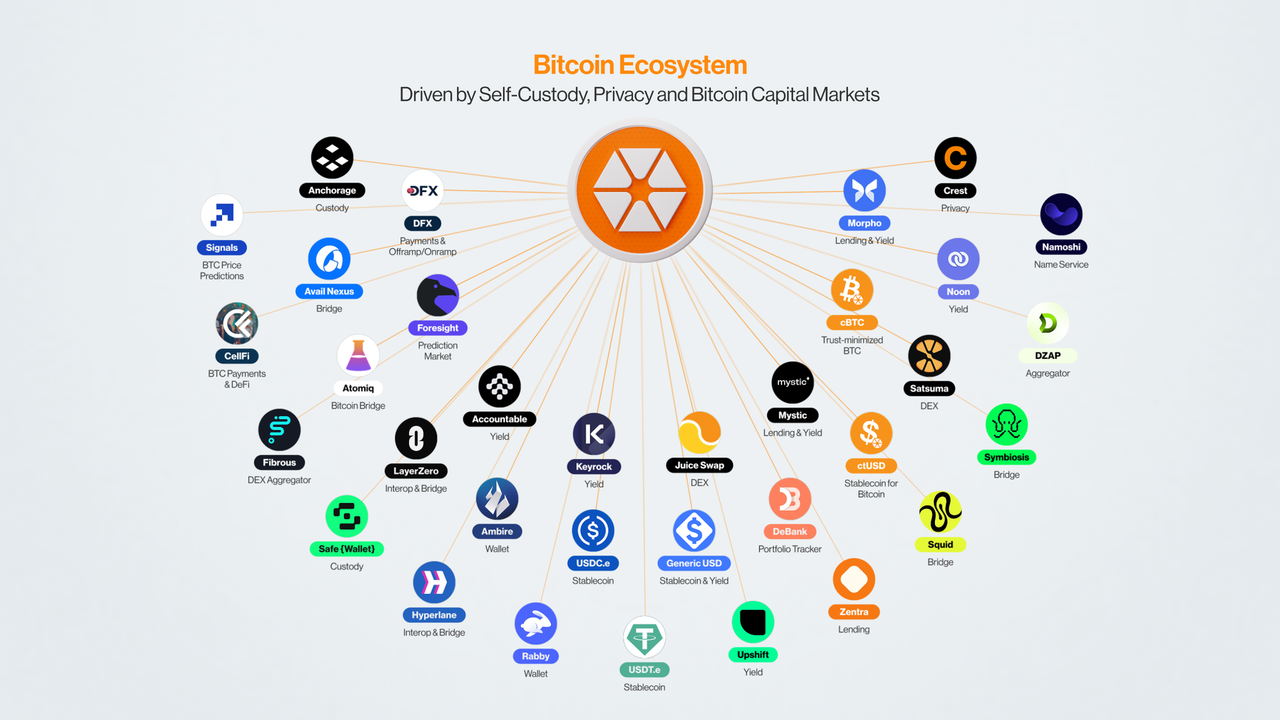
BTCFi (Bitcoin Finance) refers to the on-chain financial ecosystem built around BTC. Citrea aims to serve as both a Rollup network and the foundational layer for BTCFi.
Current Citrea ecosystem components include the native stablecoin ctUSD, BTC-collateralized lending protocols, structured yield products, DEX infrastructure, and the Clementine Bridge. ctUSD acts as a key liquidity medium, facilitating transactions and capital flows within BTCFi markets.
Citrea seeks to transform BTC from a passive store of value into an active participant in on-chain lending, yield generation, liquidity provision, and stablecoin collateralization.
As BTCFi evolves, the Bitcoin ecosystem is shifting toward an on-chain capital market—and Citrea aims to become the infrastructure layer driving that transition.
What Is the Role of the CTR Token?
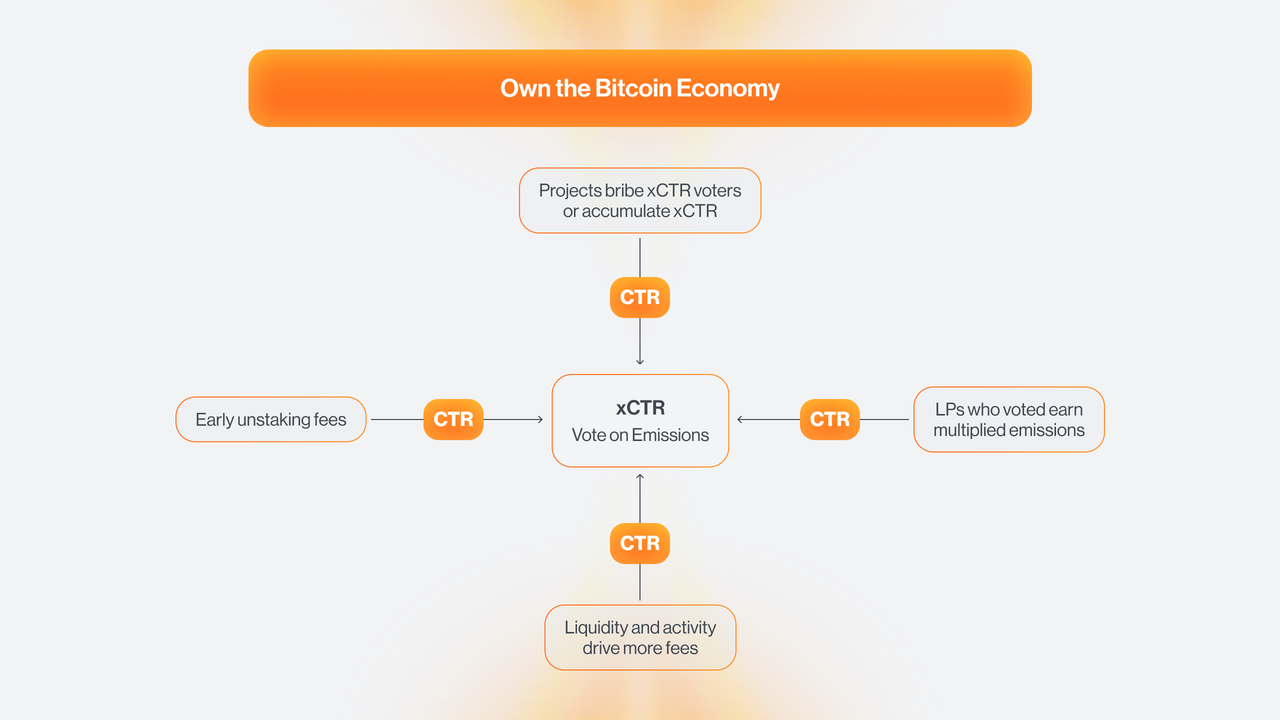
CTR is Citrea’s governance and incentive token, used for voting, liquidity incentives, ecosystem rewards, and Treasury management.
Citrea employs a dual Treasury and Gauge incentive model, letting the community decide how liquidity and ecosystem resources are allocated. This mechanism resembles veToken models in DeFi but is tailored to Bitcoin asset scenarios and BTCFi liquidity.
CTR also plays a central role in Citrea’s governance, coordinating long-term development and incentive strategies.
How Is Citrea Different from Other Bitcoin Layer 2 Solutions?
The Bitcoin Layer 2 landscape includes independent chains, sidechains, Rollups, and hybrid architectures.
Unlike Stacks and other Layer 2 projects, Citrea prioritizes Bitcoin-native settlement and uses ZK proofs plus BitVM verification to anchor final security to the Bitcoin main chain. Its Type-2 zkEVM also facilitates Ethereum-to-Bitcoin application migration.
In contrast, many traditional Bitcoin Layer 2 solutions depend on federated verifiers, multi-sig bridges, or separate security networks.
| Project |
Approach |
EVM Compatible? |
Security Source |
| Citrea |
ZK Rollup + BitVM |
Yes |
Bitcoin |
| Stacks |
Independent Chain + PoX |
Partial |
Stacks Verifiers |
| Rootstock |
Federated Sidechain |
EVM |
Federation |
| Merlin Chain |
ZK + Bridge |
EVM |
Hybrid |
Citrea’s technical complexity is higher, and its ecosystem growth depends on the broader maturity of Bitcoin Rollup infrastructure.
Citrea’s Funding and Ecosystem Progress
Citrea has raised approximately $16.7 million to date from investors including Galaxy, Founders Fund, Delphi Digital, Maven11, and Mirana Ventures. Its $14 million Series A closed in October 2024.
Public data shows the mainnet is live, with over 40,000 ecosystem addresses and cumulative transactions exceeding one million. CTR spot trading is also available.
Bitcoin Rollups remain nascent, and the market continues to monitor Rollup costs, BitVM efficiency, BTCFi liquidity depth, and cross-chain bridge security.
Summary
As a leading ZK Rollup project in the Bitcoin Layer 2 and BTCFi space, Citrea’s core goal is to provide smart contracts and on-chain financial capabilities for BTC while preserving Bitcoin’s security.
Through zkEVM, BitVM, ctUSD, and the BTCFi ecosystem, Citrea is working to evolve Bitcoin from a pure store of value into a programmable financial infrastructure.
FAQs
Is Citrea a Bitcoin Layer 2?
Yes. Citrea is a Bitcoin Layer 2 and Bitcoin Rollup scaling project.
What is BitVM?
BitVM is a technology that enables complex off-chain computation verification without altering Bitcoin’s consensus rules.
What is ctUSD?
ctUSD is a Bitcoin-native stablecoin within the Citrea ecosystem, designed for BTCFi liquidity and DeFi transactions.
What are the uses of CTR?
CTR is used for governance voting, liquidity incentives, ecosystem rewards, and Treasury management.
How does Citrea differ from traditional Bitcoin sidechains?
Citrea emphasizes a Bitcoin-native Rollup architecture, whereas traditional sidechains typically depend on federated verifiers or custodial bridges.
Is Citrea's mainnet live?
Yes, Citrea’s mainnet is live, with ecosystem applications and trading activities already operational.