For sharing economy and DePIN projects, the core challenge isn’t just onboarding devices to the blockchain—it’s whether device data is trustworthy, how order revenue is tracked, and how on-chain participants interpret yield distribution paths.
This challenge typically centers on six pillars: device onboarding, data verification, order mapping, yield recording, PowerPass, and user participation.
ShareX: End-to-End Operating Mechanism
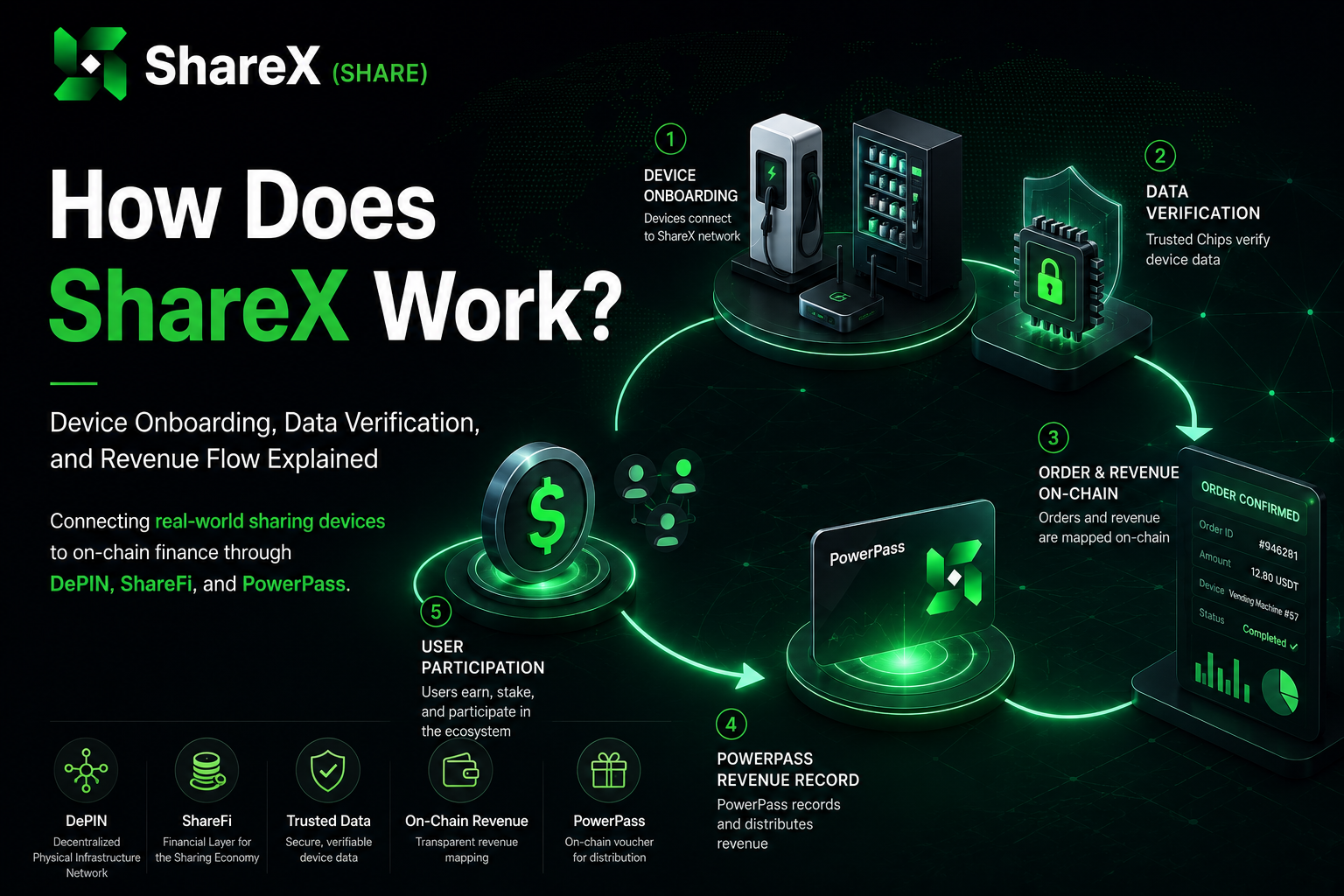
The ShareX operating logic functions as a DePIN workflow that bridges real-world shared devices, on-chain data records, and yield distribution. Its core mission is to translate real-world consumer behavior into verifiable, immutable, and participatory on-chain data structures.
ShareX is structured around Deshare, Trusted Chips, ShareFi, and PowerPass. Device operators first connect shared charging stations, vending machines, or other IoT endpoints to the ShareX network. These devices generate orders, usage logs, and revenue data. Trusted Chips or alternate onboarding protocols then verify data provenance. Finally, the on-chain system records validated orders and yield data, distributing them via PowerPass or related mechanisms.
This approach ensures ShareX isn’t merely logging device IDs on-chain—it builds a robust closed-loop system focused on device usage, data authenticity, and revenue mapping. For consumer DePIN initiatives, genuine orders and verifiable data are the foundation of sustainable ecosystem operations.
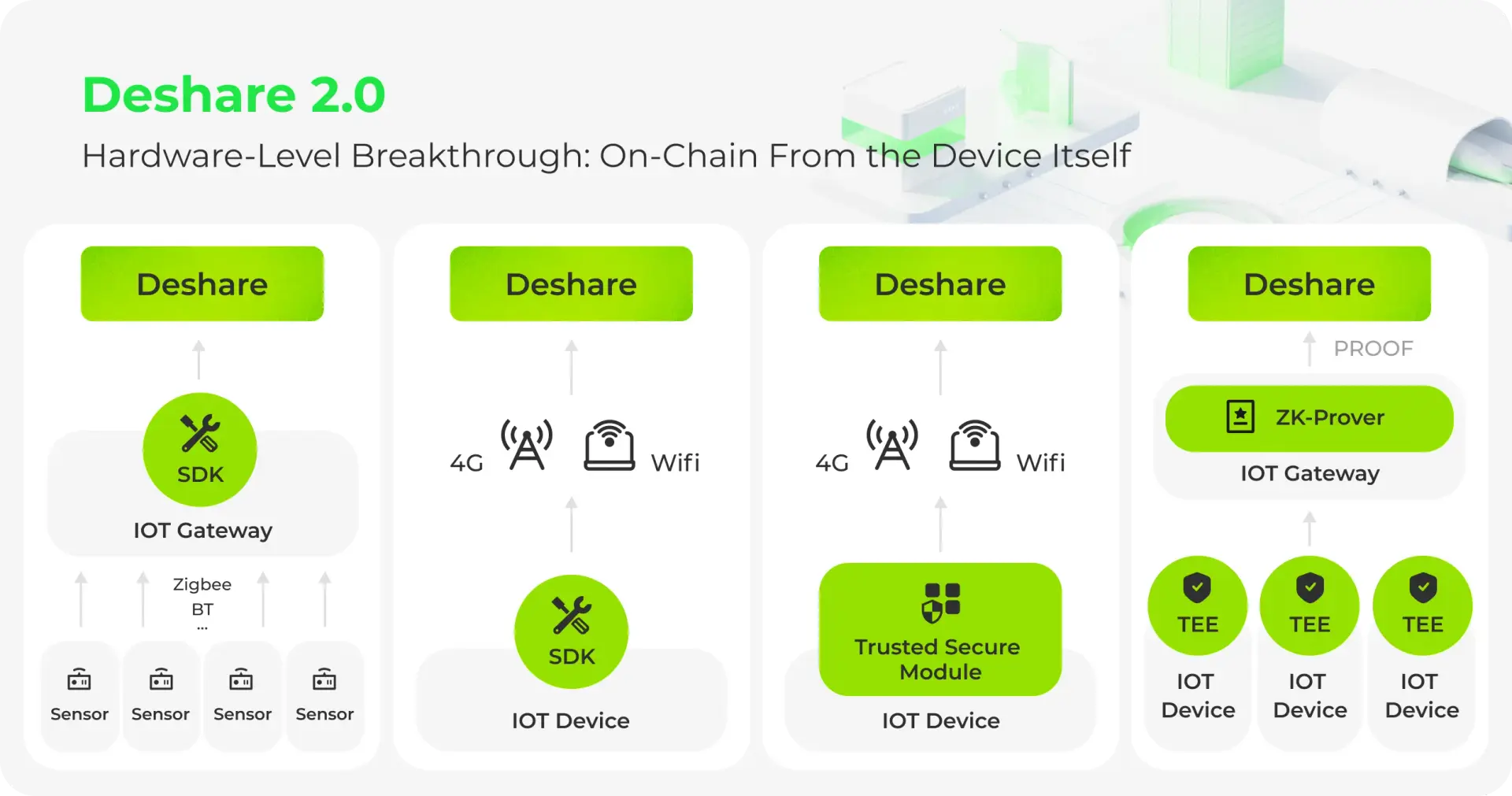
At the heart of integrating shared devices into the ShareX network is Deshare, which connects real-world devices to the blockchain. Deshare operates as ShareX’s device onboarding protocol, managing data entry and authentication across diverse device types.
In practice, device operators select an onboarding method—Cloud Gateway, Edge SDK, Trusted Chips, or Native On-chain. The system configures onboarding based on the device’s technical profile. Devices then begin uploading order, status, location, or usage data. This data feeds into ShareX’s on-chain recording and yield calculation workflows.
| Onboarding Method |
Target Devices |
Core Function |
| Cloud Gateway |
Existing cloud systems |
Connect traditional IoT platforms |
| Edge SDK |
Edge devices |
Enable device-side data generation |
| Trusted Chips |
Trusted hardware |
Verify data provenance |
| Native On-chain |
Native blockchain devices |
Direct blockchain integration |
This table illustrates ShareX’s modular, layered approach to device onboarding—tailored to device maturity and trust requirements. The architecture supports both legacy and high-trust, next-generation devices.
Trusted Chips: Securing Device Data Integrity
Trusted Chips are ShareX’s hardware-based mechanism for verifying device data authenticity. These chips provide cryptographic signatures at the hardware level, ensuring that order and usage data originate from genuine devices—not human manipulation or backend tampering.
Operationally, devices generate orders or usage data in real-world environments. Trusted Chips sign or authenticate this data. The system ingests these verified records into the blockchain, supporting order analytics, yield distribution, and PowerPass workflows.
This mechanism is critical—one of DePIN’s greatest challenges is ensuring the trustworthiness of real-world data. Without verifiable device revenue, order counts, or usage, the on-chain yield structure lacks credibility. Trusted Chips minimize the risk of data forgery, establishing real devices as reliable sources of on-chain assets.
Mapping Orders and Revenue On-Chain
Mapping orders and revenue is the linchpin connecting real-world operations to blockchain finance in ShareX. The core process transforms device-generated consumption data into on-chain, auditable yield metrics.
Here’s how it works: Users interact with shared devices and complete payments in the real world. Devices log order amounts, usage times, device status, and related data. The system verifies and structures this data, then maps order and revenue information on-chain for yield recording, distribution, or ShareFi processes.
This workflow brings real consumption data into the on-chain financial system. In traditional sharing models, data is siloed in centralized companies. ShareX introduces transparency, making orders and yields auditable. For RWA–DePIN hybrids, income mapping is essential for establishing real-world backing for on-chain assets.
PowerPass: Recording Yield Distribution
PowerPass is the ShareX ecosystem’s on-chain credential for linking device yields to blockchain records. By leveraging on-chain vouchers or NFT structures, PowerPass tracks user participation, staking, and distribution entitlements.
The process: Real-world devices generate orders and income. The system converts validated data into yield records. PowerPass holders participate in staking or distribution frameworks. The blockchain then records yield distribution based on device income, order metrics, and protocol rules.
This design means PowerPass is much more than a collectible NFT—it serves as a proof-of-yield and participation credential. It connects device revenue, on-chain identity, and distribution flows, giving users transparent insight into their engagement with the ShareX ecosystem.
User Participation in the ShareX Ecosystem
Users can participate in the ShareX ecosystem by utilizing shared devices, holding PowerPass, engaging in staking, tracking distribution records, and using SHARE tokens for payments or incentives. Participation can be both as a real-world consumer and an on-chain contributor.
The process: Users interact with shared devices—such as charging stations or vending machines—in real-world settings. Devices generate order data, which is verified and recorded on-chain via ShareX. On-chain users then participate in yield recording through PowerPass or similar mechanisms. Finally, ShareFi ties together device revenue, on-chain credentials, and ecosystem incentives.
This integrated participation model means ShareX bridges everyday consumption with blockchain finance. Users aren’t limited to interacting with a protocol—they can experience DePIN’s real-world impact through devices, data, and yield credentials.
Summary
ShareX’s workflow centers on device onboarding, data verification, order mapping, and yield recording. Shared devices are first integrated through Deshare, then data is verified by Trusted Chips or other protocols, orders and revenue are mapped on-chain, and finally, yield records and distribution are managed via PowerPass and ShareFi.
The overarching focus is not simply onboarding devices to the blockchain, but ensuring that real-world consumption data is verifiable on-chain. Device authenticity, order data, yield mapping, and user participation are the pillars of the ShareX operating model.
FAQ
How does ShareX operate?
ShareX onboards real-world shared devices through Deshare and verifies device data with Trusted Chips. Device-generated orders and revenue are mapped on-chain, then yield records are created via PowerPass and ShareFi.
What is Deshare’s role in ShareX?
Deshare is ShareX’s device onboarding layer, enabling shared devices, IoT endpoints, and real-world hardware to join the blockchain network through multiple onboarding methods.
Why are Trusted Chips critical?
Trusted Chips verify device data at the source, mitigating risks of manual forgery or data tampering. They are foundational to trusted data in ShareX.
How does PowerPass enable yield distribution?
PowerPass, as an on-chain yield credential, records device income, staking, and distribution entitlements, helping users understand their ShareX ecosystem participation.
How does ShareX differ from traditional sharing economy platforms?
Traditional sharing economy platforms are typically centralized, with device and revenue data managed by a single company. ShareX leverages DePIN, on-chain records, and the ShareFi mechanism to deliver transparent, verifiable data and yield distribution.