


#SK海力士财报不佳盘后下跌 Have chip stocks missed the “opportunity”? Institutions pour cold water: AI trading is still crowded; the bottom-picking moment isn’t here yet
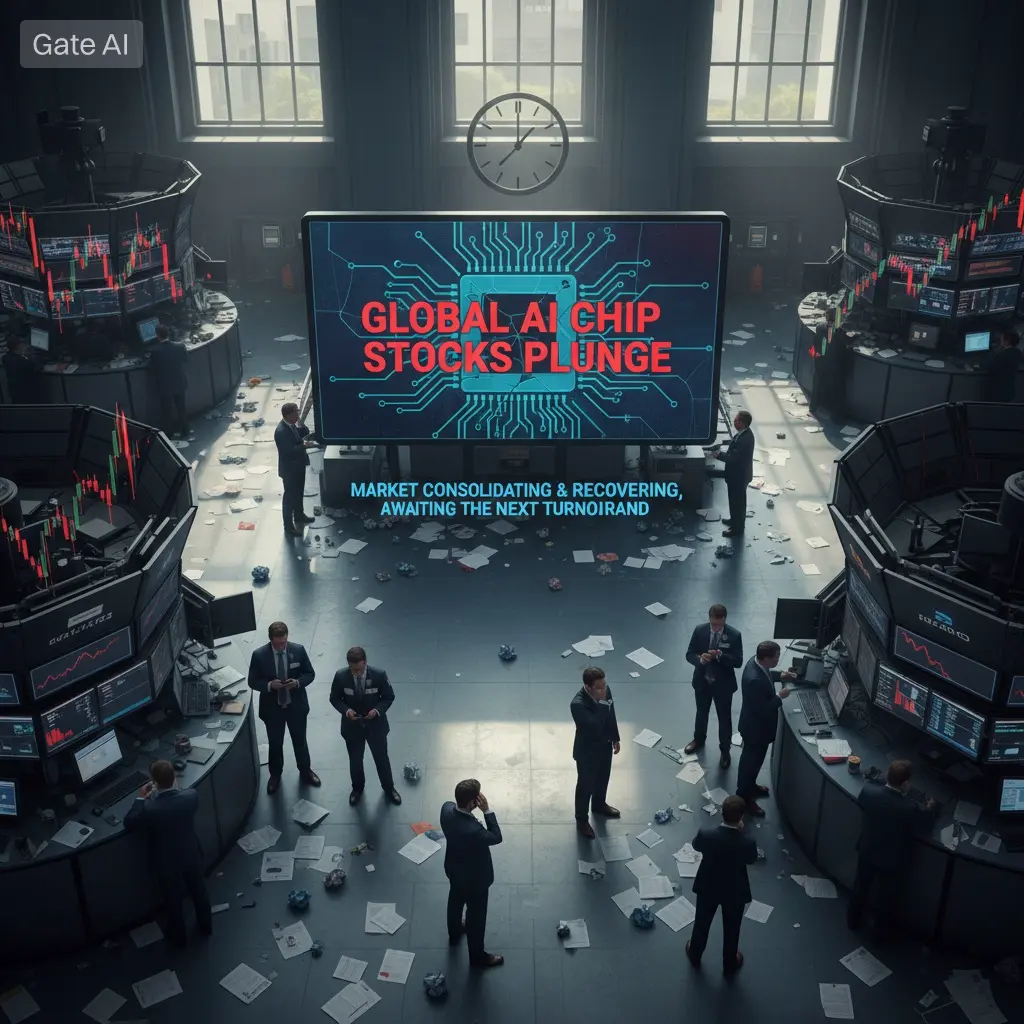
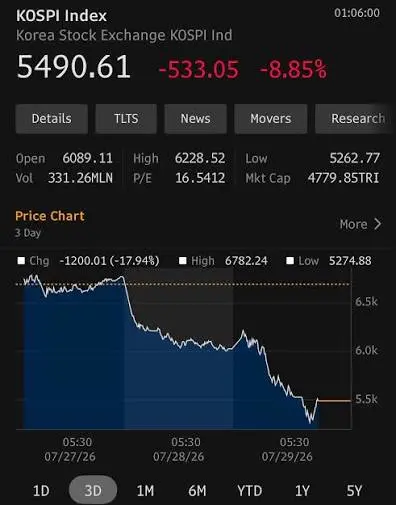
After global chip stocks suffered consecutive sell-offs, valuation pressure has indeed eased somewhat, but judging from the capital structure and fundamentals, the market has not yet formed a clear right-side signal. Paul Markham, Global Equities Head at GAM, believes AI trading in US and Korean tech stocks is still crowded. At present, it’s more suitable to keep core exposure and reduce overall positions rather than quickly betting on a reversal after a sharp drop.
This adjustment involves two layers of pressure.
The first is de-crowding at the trading level. Over the past year, capital has concentrated into HBM, memory, optical modules, and advanced compute power, resulting in highly homogeneous holdings; once risk appetite declines, active funds trimming, leverage-product stop-losses, and programmed trading can easily trigger consecutive selling pressure. Thin summer trading further amplifies price volatility, so the near-term drawdowns may not fully reflect deterioration in fundamentals, but it also means that position liquidation and “cleaning out” of chips may take longer than expected.
The second is a shift in valuation logic. In the past, when markets saw higher capital expenditures, they would directly upgrade expectations for chip demand and earnings. Now, investors are starting to examine whether those investments can translate into revenue, profits, and free cash flow. The product competitiveness and earnings trends of leading companies such as SK hynix remain steady, but strong fundamentals don’t automatically mean the stock price will bottom immediately. In a high-expectation environment, meeting earnings expectations only shows that valuation hasn’t deteriorated further; only consistent upside surprises can reopen meaningful upside space.
The key validation ahead will come from earnings reports of tech giants such as Meta, Microsoft, and Amazon. The focus shouldn’t be only on the scale of capital expenditures, but also on cloud business growth, AI revenue contribution, profit margins, and free cash flow. If the giants continue to raise investment but cannot prove that the return on investment improves in step, chip stocks may still face a second round of valuation compression.
Therefore, the current situation looks more like a transition period from a “broad rally trade” to “earnings-based screening.” The long-term industrial trend for AI hasn’t ended, but bottom-picking conditions are still not sufficient in the short term.
The real timing worth adding to positions requires seeing all three points at once: leading companies stop the decline on reduced volume, crowded holdings clearly fall, and tech giants prove that AI spending can generate stable returns.
After global chip stocks suffered consecutive sell-offs, valuation pressure has indeed eased somewhat, but judging from the capital structure and fundamentals, the market has not yet formed a clear right-side signal. Paul Markham, Global Equities Head at GAM, believes AI trading in US and Korean tech stocks is still crowded. At present, it’s more suitable to keep core exposure and reduce overall positions rather than quickly betting on a reversal after a sharp drop.
This adjustment involves two layers of pressure.
The first is de-crowding at the trading level. Over the past year, capital has concentrated into HBM, memory, optical modules, and advanced compute power, resulting in highly homogeneous holdings; once risk appetite declines, active funds trimming, leverage-product stop-losses, and programmed trading can easily trigger consecutive selling pressure. Thin summer trading further amplifies price volatility, so the near-term drawdowns may not fully reflect deterioration in fundamentals, but it also means that position liquidation and “cleaning out” of chips may take longer than expected.
The second is a shift in valuation logic. In the past, when markets saw higher capital expenditures, they would directly upgrade expectations for chip demand and earnings. Now, investors are starting to examine whether those investments can translate into revenue, profits, and free cash flow. The product competitiveness and earnings trends of leading companies such as SK hynix remain steady, but strong fundamentals don’t automatically mean the stock price will bottom immediately. In a high-expectation environment, meeting earnings expectations only shows that valuation hasn’t deteriorated further; only consistent upside surprises can reopen meaningful upside space.
The key validation ahead will come from earnings reports of tech giants such as Meta, Microsoft, and Amazon. The focus shouldn’t be only on the scale of capital expenditures, but also on cloud business growth, AI revenue contribution, profit margins, and free cash flow. If the giants continue to raise investment but cannot prove that the return on investment improves in step, chip stocks may still face a second round of valuation compression.
Therefore, the current situation looks more like a transition period from a “broad rally trade” to “earnings-based screening.” The long-term industrial trend for AI hasn’t ended, but bottom-picking conditions are still not sufficient in the short term.
The real timing worth adding to positions requires seeing all three points at once: leading companies stop the decline on reduced volume, crowded holdings clearly fall, and tech giants prove that AI spending can generate stable returns.