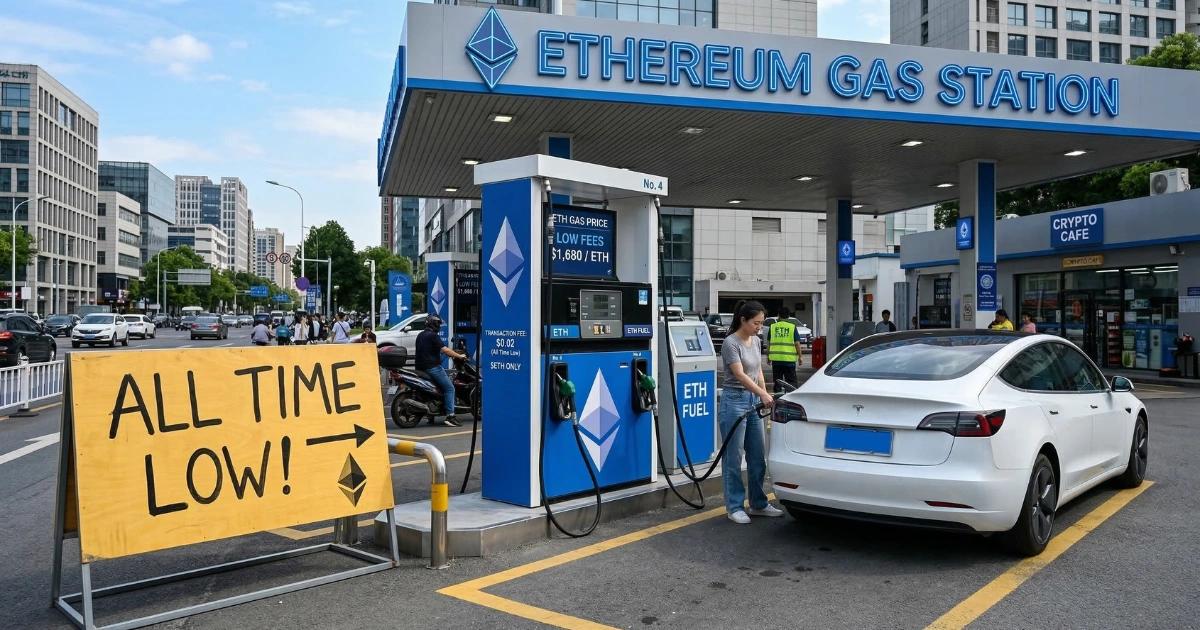
Ethereum Gas fee drops to 0.045 Gwei, reaching a new low, reducing on-chain operation costs to under $0.01. Layer2 and upgrades are driving the mainnet transformation into a settlement layer.
Ethereum Gas fee hits new low, on-chain operation costs drop to “pennies”
For a long time, Ethereum network transaction fees have been a topic of discussion due to high costs, but recent developments show a clear change. According to on-chain data platform Etherscan, as of the time of writing, the average Gas price on Ethereum is about 0.045 Gwei, a rare low in recent years.
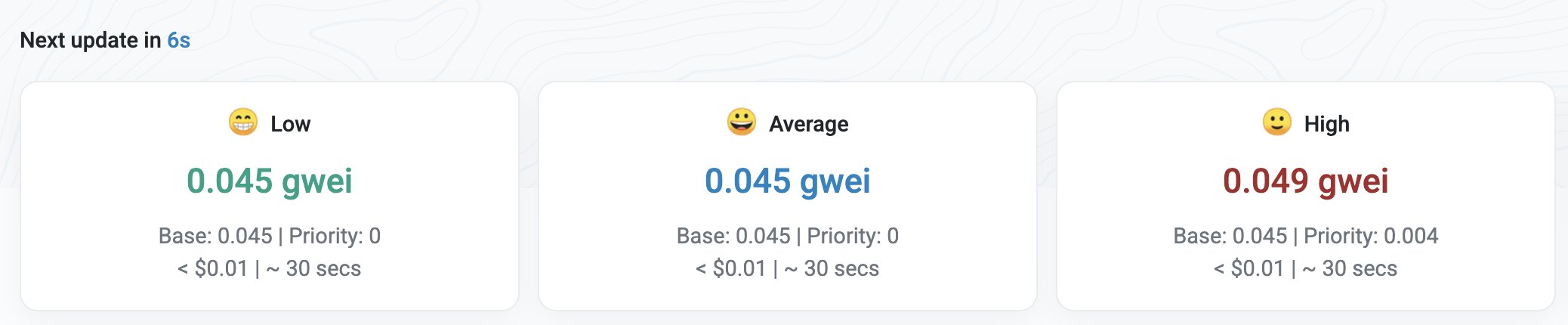
Image source: Etherscan Average Gas Price on Ethereum is about 0.045 Gwei
At this rate, most on-chain operations have become extremely cheap. 《Crypto City》 tested on Uniswap, where typical ERC-20 token swaps cost about $0.01 in fees; transfer fees are even less than $0.01. Even for more complex operations like cross-chain transfers or DeFi lending, costs generally stay below approximately $0.12.
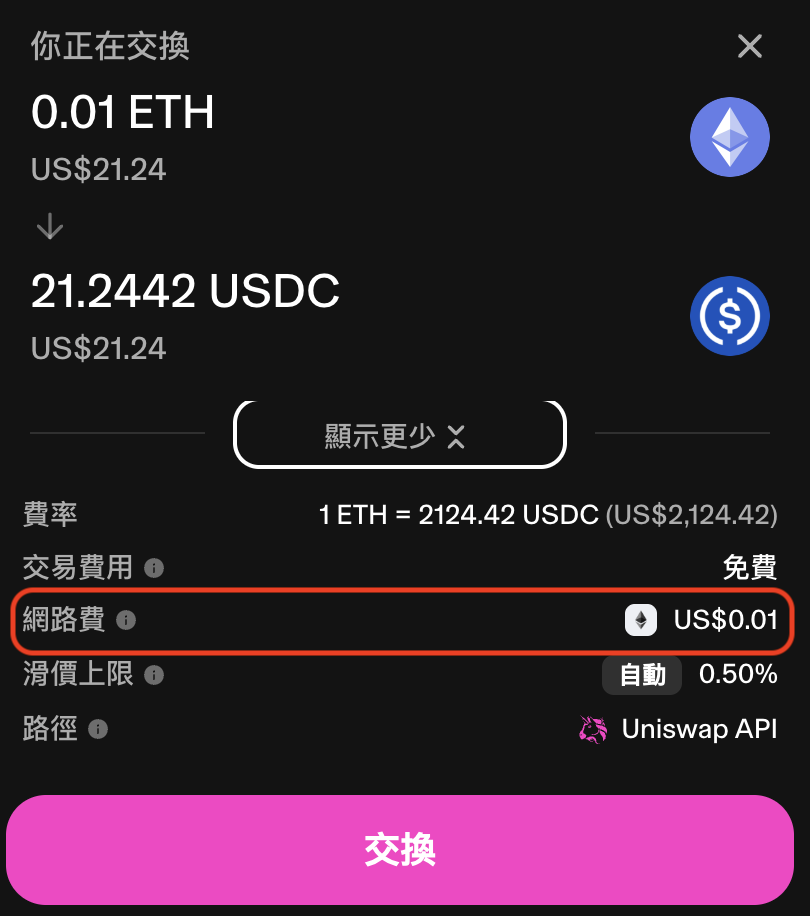
Image source: Uniswap 《Crypto City》 tested on Uniswap, where typical ERC-20 token swaps cost about $0.01 in fees
From a long-term trend perspective, the decrease in Gas fees is even more significant. Over the past week, average fees ranged from 0.5 to 0.6 Gwei, while in the same period in 2025, the average fee was still close to 6 Gwei, indicating a reduction of over 90% within a year. For Ethereum transactions that once cost over $200 at market peaks, current fee levels are almost at a historic low.
Layer2 and upgrades drive Ethereum’s transformation
Analysis indicates that the decline in transaction fees is closely related to recent network architecture adjustments. As Layer2 scaling solutions grow rapidly, many daily transactions have shifted to second-layer networks like Arbitrum, Base, and Optimism. Meanwhile, the Dencun upgrade completed in 2024 introduced EIP-4844 (Proto-Danksharding), significantly reducing the cost of data publication for Rollups on the mainnet; the Fusaka upgrade in 2025 further increased Blob capacity through PeerDAS technology, enhancing data throughput.
Further reading
Ethereum transaction fees hit new lows! Average below $0.10, entering ultra-low fee era with Layer2 scaling
These technological changes enable high-frequency trading, stablecoin transfers, and DeFi operations to be completed on Layer2, while the mainnet gradually shifts to a secure settlement layer. Currently, Ethereum mainnet block utilization is about 46%, relatively stable compared to past congestion issues. For developers, lower Gas fees also make testing smart contracts, deploying applications, and minting NFTs easier.
Transaction fee reduction amid ongoing market attention to demand and price performance
Despite transaction costs dropping to lows, the Ethereum market still faces other variables. The ETH price recently hovers around $2,075, still significantly below the 2025 peak. Market analysis suggests that overall economic conditions and ETF capital outflows exert pressure on the crypto market’s overall price. However, on-chain data shows that activity within the Ethereum ecosystem remains strong.
Recent transaction counts remain high, partly due to increasing Layer2 network transaction volume. Additionally, stablecoin settlements and smart contract calls remain active. These data indicate that demand for Ethereum ecosystem usage persists, though activity is gradually shifting from the mainnet to scaling layers.
Comparison of transaction and cross-border remittance costs, stablecoins still have situational advantages
Recently, Mega Bank conducted cross-border remittance tests, indicating that stablecoin transactions typically incur a fixed fee of about 1 to 2 USDT, plus approximately 0.2% of the transfer amount. According to the experiment, if remittance amounts exceed about $7,000 (around NT$200,000), bank remittance costs may be lower than stablecoin transfers.
However, actual on-chain transaction fees currently suggest a different picture. After Ethereum Gas fees dropped to historic lows, a single ERC-20 transfer typically costs only about $0.01 to $0.02, and DeFi swap transactions average around $0.11 to $0.14. In other words, even multiple on-chain operations cost far less than a fixed rate of 1 USDT. Using Layer2 networks, some transactions can cost as little as $0.01 or less.
Therefore, some believe that the cost model used by Mega Bank in their experiment may not fully reflect the rapid decline in current on-chain fees. As Ethereum scaling continues and Gas fees decrease, the cost structure of cryptocurrency payments and cross-border transfers is rewriting market perceptions of blockchain transaction costs.
Further reading
Mega Bank’s stablecoin test: large cross-border remittances still favored! NT$ stablecoin application scenarios to be clarified
Mega Bank’s stablecoin test sparks debate! Industry comments: Nobel-level discussion, responded by Yu Zhe-an and crypto editors
Aviso legal: La información de esta página puede proceder de terceros y no representa los puntos de vista ni las opiniones de Gate. El contenido que aparece en esta página es solo para fines informativos y no constituye ningún tipo de asesoramiento financiero, de inversión o legal. Gate no garantiza la exactitud ni la integridad de la información y no se hace responsable de ninguna pérdida derivada del uso de esta información. Las inversiones en activos virtuales conllevan riesgos elevados y están sujetas a una volatilidad significativa de los precios. Podrías perder todo el capital invertido. Asegúrate de entender completamente los riesgos asociados y toma decisiones prudentes de acuerdo con tu situación financiera y tu tolerancia al riesgo. Para obtener más información, consulta el
Aviso legal.


