The rise of blockchain games is rooted in the limitations of traditional games, where assets cannot be transferred and returns are not attributed to players. Axie Infinity, one of the pioneering projects, leverages NFT ownership and a token-based economy to enable players to convert their in-game actions into tradable value.
This framework typically encompasses gameplay, NFT assets, token incentives, and marketplace trading, together forming a comprehensive blockchain game economic structure.
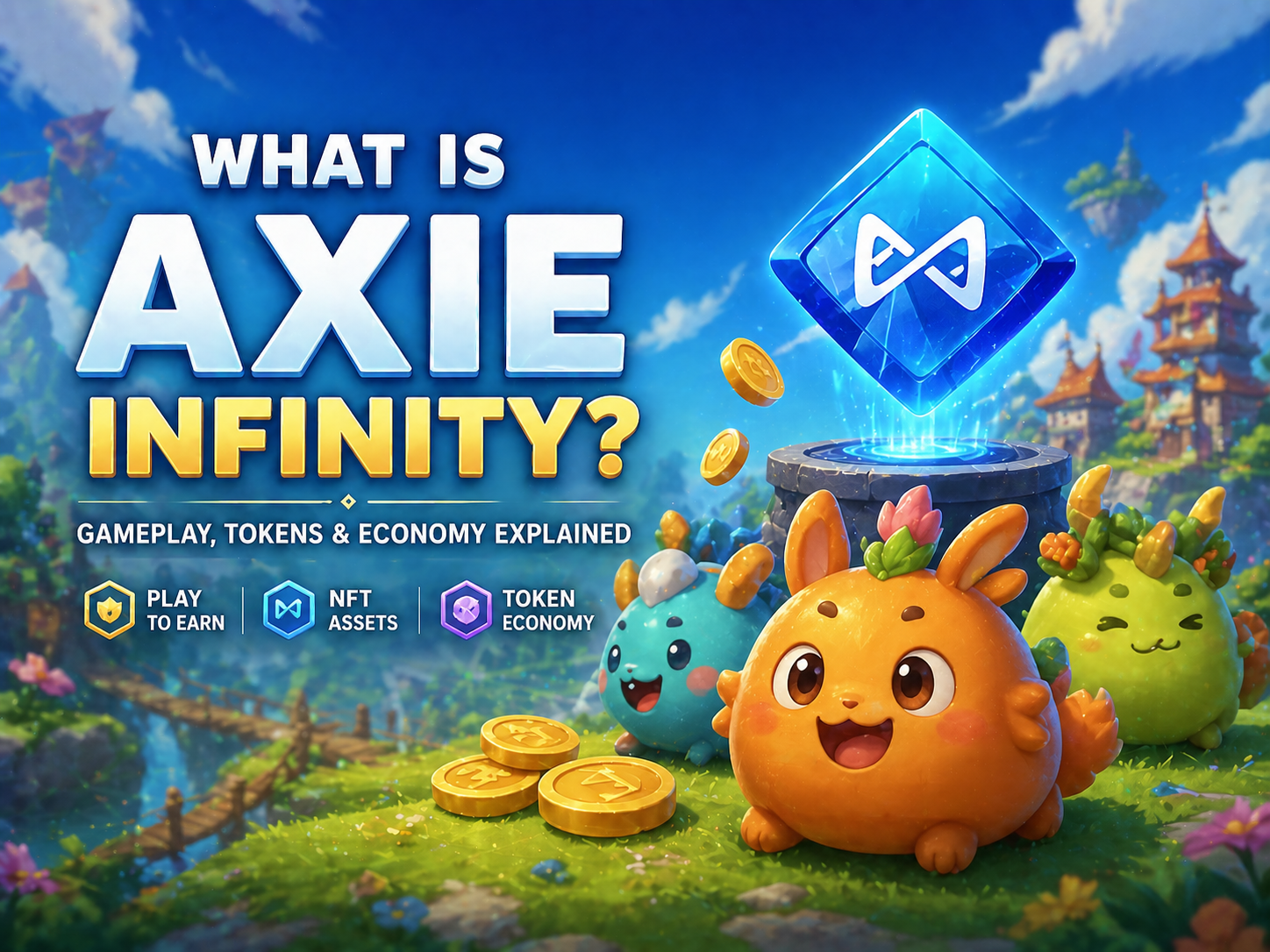
What Is Axie Infinity?
Axie Infinity is a blockchain-based gaming ecosystem where players control NFT characters to engage in battles and earn returns.
At its core, Axie Infinity uses NFT assets to represent game characters and items. Each Axie is a unique digital asset recorded on-chain, with distinct ownership and identity. Blockchain technology empowers players with true ownership, allowing them to freely trade these assets in the marketplace.
The game integrates traditional turn-based combat with blockchain asset systems, creating a complete economic cycle through battling, breeding, and trading. This design positions Axie Infinity not just as a game, but as a blockchain-powered virtual economy.
This structure is significant because it transforms entertainment into value-driven activity, making blockchain games a key application area in Web3.
How Axie Infinity's Core Gameplay Mechanics Work
Axie Infinity's gameplay is a fusion of "battle + development + economy."
Players first acquire Axie characters, which exist as NFTs and possess unique attributes and skills. By participating in PVE or PVP battles, players earn rewards such as tokens or in-game resources.
These resources can be used to breed new Axies, generating additional NFT characters. Breeding costs and rarity are managed algorithmically to prevent asset value inflation.
Players can then continue playing, optimize their teams, or sell assets in the marketplace to realize returns. Throughout, user actions and system incentives create a continuous cycle.
This mechanism is crucial as it establishes a sustainable game economy, closing the loop between player activity and asset value.
The Role and Function of AXS in the Game Economy
AXS is the primary token in the Axie Infinity ecosystem, serving governance, staking, and value capture functions.
AXS acts as the central asset linking player activity with platform incentives. Players earn AXS by participating in gameplay and ecosystem events, and can use it for staking or governance voting.
Structurally, AXS serves as the "value carrier," while tokens like SLP function as "circulation tools." AXS is designed for long-term value accumulation; SLP incentivizes short-term gameplay.
Staking AXS allows users to earn returns, encouraging long-term token holding and enhancing ecosystem stability.
The layered token model is important because it separates short-term incentives from long-term value, improving the sustainability of the economic system.
Design of In-Game Assets and the NFT System
Axie Infinity's NFT system is the foundation of its economic model, with all core assets existing as NFTs.
Axie NFTs represent game characters, each with unique attributes, skills, and rarity, all recorded on-chain for immutability. Players have full control—assets can be transferred, sold, or held.
Beyond characters, land and items can also be represented as NFTs. These assets are used in gameplay and can be traded in the marketplace, facilitating value flow.
| Asset Type |
Form |
Use |
Tradable |
Sources of Return |
| Axie Characters |
NFT |
Combat and Breeding |
Yes |
Rarity and Battle Power |
| Land Assets |
NFT |
Ecosystem Building |
Yes |
Use Value |
| Game Resources |
Token |
Breeding and Upgrading |
Yes |
Game Demand |
The NFT system creates value through scarcity and tradability. This design is significant because it turns game assets into genuinely ownable digital assets.
Axie Infinity's Return Model and Player Participation
Axie Infinity operates on a "participation equals output" blockchain game economic model.
Players earn token rewards by battling, which is the primary source of return. Players can also breed Axies and sell them for profit, similar to digital asset production.
Additionally, trading NFT assets—buying low-priced characters and selling at a premium—provides returns, with prices determined by supply and demand.
Some users earn extra returns through staking AXS or participating in governance. This multi-tiered return structure allows for broad participation.
This model is important because it directly embeds user activity into the economic system, making the game both entertainment and a method of value creation.
Differences Between Axie Infinity and Other Blockchain Games
Axie Infinity is distinct from other blockchain games in gameplay design, economic structure, and user participation.
Axie Infinity focuses on a closed-loop Play-to-Earn economy, while some blockchain games emphasize virtual worlds or creator ecosystems.
| Comparison Dimension |
Axie Infinity |
Other Blockchain Games (e.g., Sandbox) |
| Core Gameplay |
Combat and Development |
Creation and Building |
| Economic Model |
Play-to-Earn |
User-Generated Content |
| Asset Type |
Character NFTs |
Land and Items |
| Sources of Return |
Combat and Breeding |
Content and Trading |
| User Role |
Player-Driven |
Creator-Driven |
Structurally, Axie Infinity is a game-driven economy, while other blockchain games are platform-driven.
This distinction is significant as it shapes user participation and the ecosystem's development trajectory.
Participants and Value Flow in the Axie Infinity Ecosystem
The Axie Infinity ecosystem comprises players, investors, developers, and marketplace participants.
Players generate assets through gameplay, serving as the main value producers. Investors drive value flow by purchasing assets or tokens in the marketplace.
The development team maintains game mechanics and economic balance for system stability. Marketplace platforms provide trading channels for free asset circulation.
Value flow involves asset generation, trading, and return distribution, all dependent on user actions and system rules.
This multi-role structure is significant as it forms a complete economic network, enabling the ecosystem's ongoing operation.
Advantages and Potential Limitations of Axie Infinity
Axie Infinity's strengths lie in its mature economic model and clear gameplay mechanics.
Its NFT system and token design provide real asset value, allowing players to earn returns through gameplay. Its early user base also delivers strong network effects.
However, there are limitations. The game economy relies on new user growth; if this slows, the return model may be impacted. Token price volatility can also affect player engagement.
Structurally, the main challenge for blockchain games is balancing entertainment and economics.
This issue is critical as it directly affects the project's long-term sustainability.
Summary
Axie Infinity integrates gameplay, NFT assets, and token economics to create a complete blockchain game ecosystem. AXS, as the core token, links governance and value; the NFT system provides the asset foundation; player activity drives the economic cycle. Understanding Axie Infinity requires a holistic analysis of its gameplay mechanics, asset design, and economic structure.
FAQ
What Is Axie Infinity
Axie Infinity is a blockchain-based NFT game where players control characters, participate in battles, and earn returns.
What Is the Function of the AXS Token
AXS is used for governance, staking, and value capture within the ecosystem, serving as the core token of the game economy.
How Does Axie Infinity Make Money
Players earn returns through battling, breeding, and trading NFT assets, with these returns generated by the game’s economic system.
What Are the Differences Between Axie Infinity and Traditional Games
The primary difference is asset ownership; in blockchain games, assets belong to players and can be freely traded.
Who Is Axie Infinity Suitable For
Axie Infinity is ideal for users interested in blockchain games, NFT assets, and the Play-to-Earn model.