Against the backdrop of the blockchain performance race, the Sonic technology stack has emerged as a new generation of high performance infrastructure focused on solving the latency and cost issues that mainstream public blockchains face under heavy load. By modularly rebuilding the underlying storage and execution environment, Sonic gives developers an extremely fast and highly scalable development platform.
As a pioneer in the high performance Layer 1 sector, the Sonic technology stack holds an important position in the industry. It is not only an iteration of the original Fantom technology, but also a redefinition of the EVM ecosystem’s scaling path. By achieving tens of thousands of TPS, Sonic makes complex on-chain logic that was previously constrained by performance, such as real time order books and high frequency gaming interactions, practically possible. It is an important technical engine driving Web3 toward large scale commercial applications.
Sonic’s Carmen Storage Engine: The Key to Eliminating IO Bottlenecks
The first major contributor to Sonic’s 10,000+ TPS is its innovative Carmen storage engine. Traditional blockchain storage systems usually rely on complex hierarchical Merkle tree structures, which create significant disk IO pressure when reading state.
By introducing a flat storage architecture, Carmen greatly shortens the data addressing path. This design allows validator nodes to retrieve account states at very high speed when processing transactions. It not only improves system responsiveness, but also significantly lowers the hardware cost of running nodes. This breakthrough is an important example of blockchain storage technology moving toward high performance.
Sonic’s Optimized EVM Execution Layer: Breaking Through Serial Processing Limits
To fully take advantage of the underlying storage improvements, Sonic has deeply optimized the execution layer. Traditional EVM implementations are often limited by single threaded serial processing, which means that even when the underlying consensus is extremely fast, transactions can still queue up during execution.
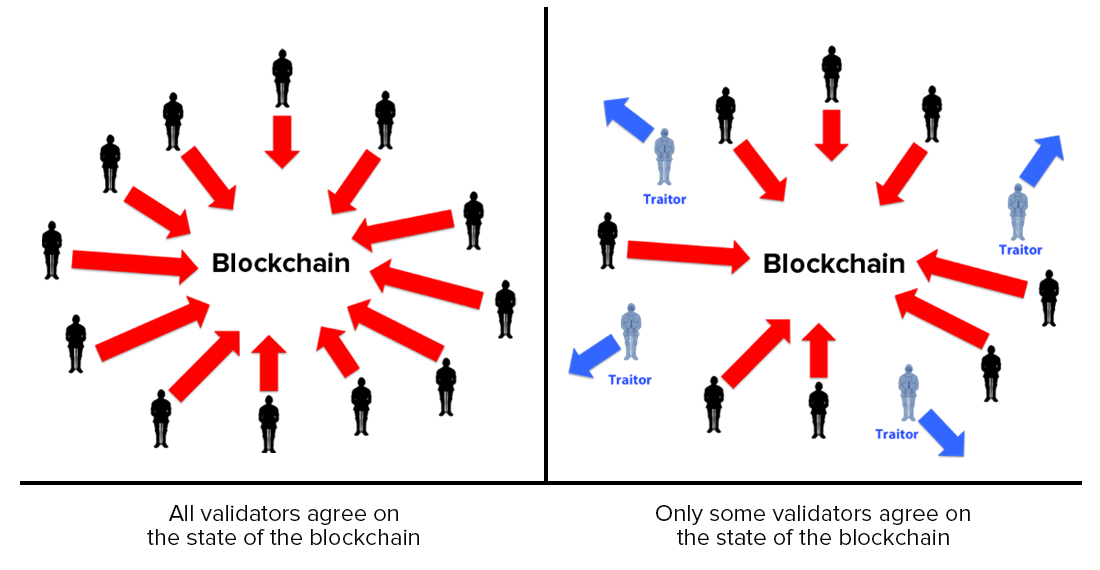
Sonic introduces parallel transaction validation logic, allowing non conflicting transactions to be processed at the same time. This EVM optimization mechanism ensures efficient use of computing resources, enabling the virtual machine to maintain extremely high throughput when processing complex smart contracts and meet the hard requirements of 10,000+ TPS.
Sonic’s Synergy: How Do the Technical Components Work Together?
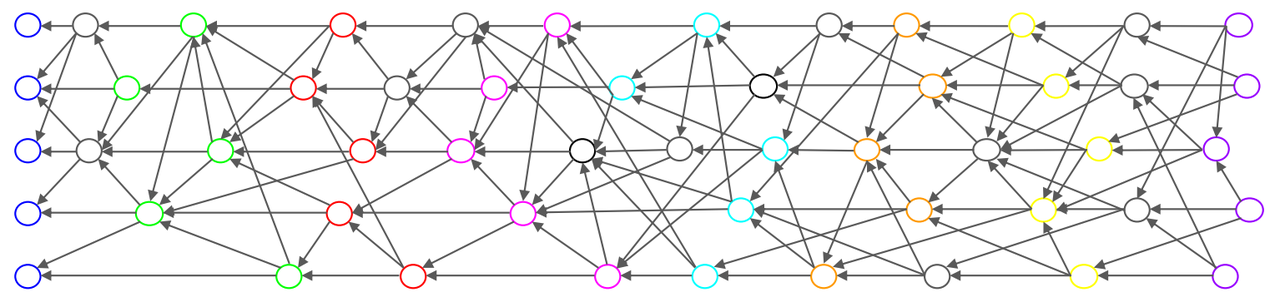
Achieving 10,000+ TPS is not the result of a single component, but of coordination among consensus, execution, and storage. The Lachesis protocol is responsible for reaching ordering consensus quickly, the optimized EVM handles computation efficiently, and Carmen performs rapid data reads and writes.
When a transaction enters the Sonic network, it first obtains near instant ordering through the aBFT mechanism in about 0.8 seconds. It is then processed in the parallel execution layer, and finally, the resulting state changes are permanently recorded in the Carmen database. This closed loop design removes every potential bottleneck in the system.
Although Sonic achieves extremely high TPS, its technology stack still pays close attention to the balance of decentralization. Through efficient code optimization, Sonic does not require validators to use expensive industrial grade servers as some public blockchains do.
This strategy of using efficiency instead of excessive hardware allows ordinary high performance PCs to participate in network maintenance as nodes. It not only helps preserve the network’s censorship resistance, but also offers a low barrier, high efficiency reference model for Layer 1 scaling solutions around the world.
Conclusion
By rebuilding the Carmen database and the EVM execution layer, the Sonic technology stack successfully breaks through the performance ceiling of traditional blockchains and achieves a leap to 10,000+ TPS. These technical innovations not only give Sonic its core competitive edge, but also provide the broader Web3 industry with a valuable practical path for balancing high performance and decentralization. In the future multichain ecosystem, this kind of solution driven by strong technical fundamentals will become a core pillar supporting large scale applications.
FAQs
What Does 10,000+ TPS Mean in Real World Applications?
It means the Sonic network can process more than ten thousand transactions per second. By comparison, the Ethereum mainnet currently processes about 15 to 30 transactions per second. This leap in throughput can support real time order book trading similar to a decentralized Nasdaq, or fully on-chain games with millions of players online at the same time.
High performance does generate large amounts of data, but the Carmen storage engine is designed precisely to address this issue. Through efficient data compression and flat indexing technology, it uses storage space far more efficiently than traditional databases, helping ease the “state bloat” problem common in high performance networks.
Do Developers Need to Learn a New Language to Adapt to the Sonic Technology Stack?
No. Sonic is fully compatible with the EVM. This means developers can continue using Solidity or Vyper, and existing Ethereum smart contracts and development tools, such as Hardhat and Foundry, can be migrated directly to Sonic while gaining native performance improvements.







