In today’s AI infrastructure landscape, cloud computing and API calls remain the dominant model. Users pay based on request volume or compute consumption. While this model is mature and easy to use, it is essentially a short-term rental mechanism, which makes it difficult for users to plan, allocate, or optimize compute resources over the long term.
By comparison, the DIEM model attempts to transform compute into a holdable and tradable digital asset. Compute can be consumed, but it can also be allocated, managed, and composed with other assets. This shift moves AI infrastructure from a service model toward an asset model, introducing ownership and financial properties to compute.
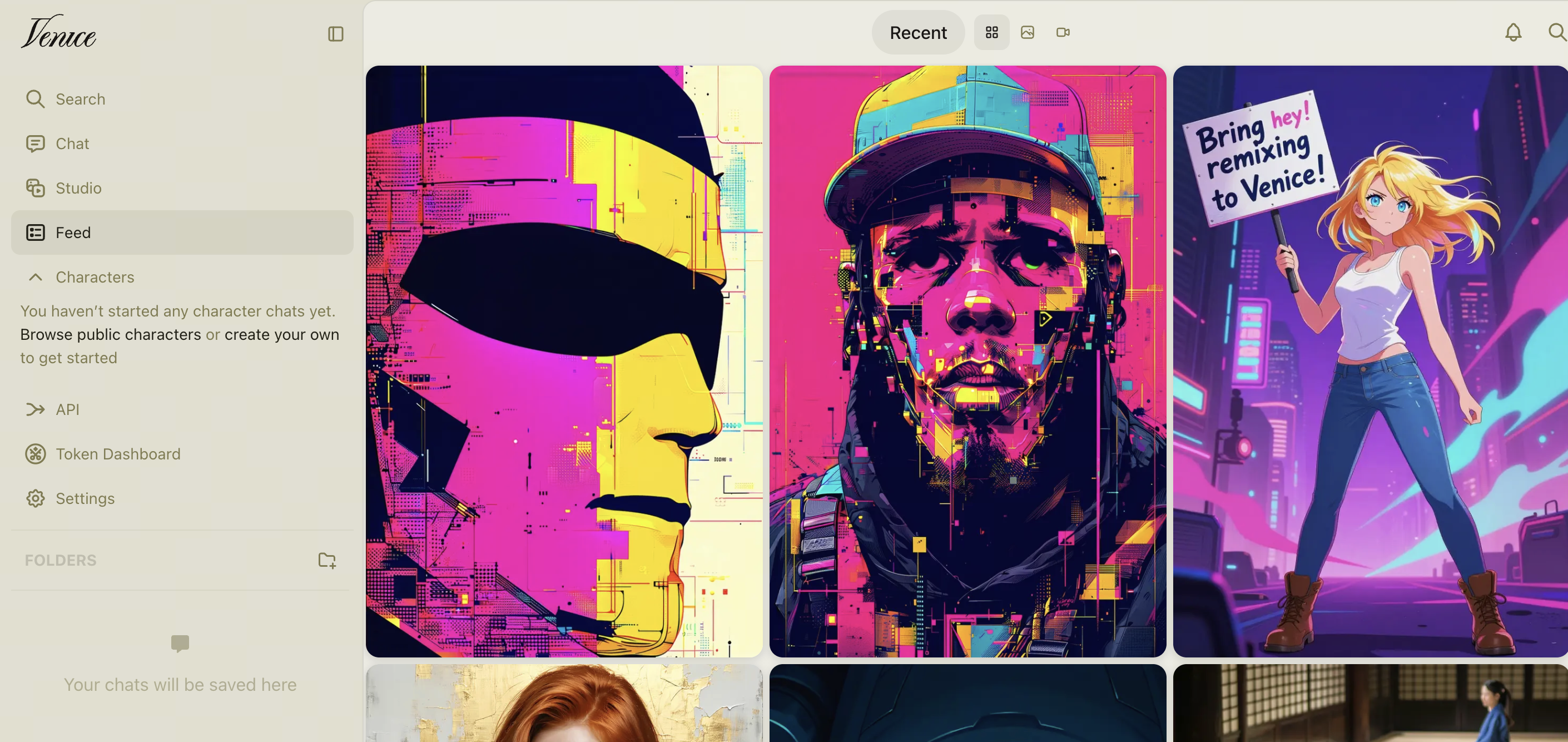
Source: venice.ai
Key Differences Between Diem (DIEM) and Traditional AI APIs
Diem (DIEM) is a token model that assetizes AI compute, allowing users not only to access compute services, but also to participate in the allocation and distribution of compute resources through token ownership. Traditional AI APIs, by contrast, are essentially “black-box services.” Users can call an interface and receive outputs, but they cannot access or influence the underlying resources.
In a traditional AI API model, such as a model inference endpoint, users submit requests and receive results, while the platform retains full control over compute resources. Users cannot intervene in resource allocation or optimize long-term cost structures. This model emphasizes pay-as-you-go access, which is useful for fast integration, but it offers little resource control.
The DIEM model abstracts compute into an on-chain token, shifting users from simple service callers into resource participants. By holding or allocating DIEM, users can indirectly access compute capacity and use it flexibly across different scenarios. This mechanism moves compute from a closed service environment into a more open market.
At the deepest level, the difference is between a service-oriented model and an asset-oriented model. This affects not only how compute is used, but also how value is distributed and circulated within the system. A deeper reading can extend into the differences between AI API models and on-chain compute models.
Compute Access Compared: Renting AI APIs vs Holding DIEM Compute Tokens
Traditional AI APIs use a typical on-demand rental model. Users call an interface and pay based on the number of requests or the amount of computation used. This approach is simple and direct, making it suitable for short-term or uncertain demand, but it offers limited room for long-term planning.
DIEM introduces a different path. Users can hold or generate DIEM to obtain access to compute resources in advance. This is closer to preconfigured compute capacity, allowing users to spread costs across future usage instead of paying separately for every request.
The core change is a shift in resource logic:
Traditional models emphasize immediate consumption, while DIEM is closer to resource holding and continuous use. This gives DIEM certain advantages in high-frequency or long-term usage scenarios.
Economically, the two approaches reflect different models:
| Dimension |
DIEM (Compute Token Model) |
Traditional AI API |
| Access method |
Hold / stake to obtain compute |
Rent by API call |
| Usage model |
Preconfigured + continuous use |
Instant calls |
| Cost structure |
Upfront cost + declining marginal cost |
Linear growth based on usage |
| Ownership |
Holdable and transferable |
No ownership |
| Flexibility |
Better suited to long-term / high-frequency use |
Better suited to short-term / low-frequency use |
| Resource control |
Partial user participation |
Fully controlled by platform |
This structural difference makes DIEM more suitable for users with stable or predictable compute needs, while the API model remains better suited to flexible, low-frequency scenarios.
Cost Structure Compared: Dynamic API Pricing vs Fixed Compute Cost Model (DIEM)
Traditional AI APIs usually use dynamic pricing based on API calls or compute volume. This is flexible in the short term, but long-term costs can be difficult to predict, especially in high-frequency use cases.
The DIEM model leans toward a fixed-cost plus usage-driven yield structure. By staking or acquiring DIEM, users lock in a certain amount of compute resources, with costs largely determined at the acquisition stage.
This means:
-
API model: costs rise linearly with usage
-
DIEM model: costs are paid upfront, while marginal usage costs decline
For companies and developers, this can improve cost predictability. At the same time, it introduces upfront allocation risk. A deeper reading can extend into compute pricing mechanisms and cost model comparisons.
Ownership and Control: Can Compute Be Held, Transferred, and Traded?
In traditional cloud computing or API models, users only receive usage rights, not ownership. Compute resources are controlled by the platform, and users cannot transfer, trade, or collateralize their access rights.
DIEM introduces the idea of compute ownership. Through tokenization, compute can be held, transferred, and even traded, giving it asset-like properties.
This shift has three key implications:
-
Compute can become part of an asset allocation strategy
-
Users can use compute more flexibly across different scenarios
-
Resources are no longer tied to a single platform
This shift from usage rights to ownership is one of the most important innovations of the DIEM model. A deeper analysis can extend into assetized compute models and digital asset ownership structures.
DeFi Composability Compared: How DIEM Enables Compute Collateral and Liquidity Expansion
Traditional AI APIs and cloud computing have almost no financial properties. Their use cases are largely limited to computation itself.
DIEM is different. Because it exists as a token, it can connect directly with the DeFi ecosystem. For example, users can use DIEM for collateralized lending, liquidity pools, or derivative products.
This composability creates new possibilities:
-
Compute assets can generate additional yield
-
Resources can move across different protocols
-
AI and DeFi can form an interconnected ecosystem
At its core, this is the financialization of compute. A deeper reading can extend into DeFi composability and on-chain asset liquidity design.
Why the DIEM Model Changes AI Infrastructure: From Cloud Computing to On-Chain Compute Markets
The model represented by DIEM is, in effect, rebuilding the underlying logic of AI infrastructure.
Traditional cloud computing is a centralized resource pool controlled by a small number of large platforms. DIEM, by contrast, aims to build a decentralized compute market where resource supply and demand can be matched through on-chain mechanisms.
This shift may bring several effects:
-
Lower entry barriers, allowing more participants to provide compute
-
Higher resource utilization through market-based pricing
-
Greater transparency and verifiability
Over the long term, this model could push AI infrastructure from platform monopolies toward open markets. A deeper analysis can extend into decentralized compute networks and Web3 infrastructure transformation.
Conclusion
Diem (DIEM) is a tokenized model that turns AI compute into an on-chain asset. Its core difference is that it upgrades compute usage rights into compute ownership and allocation rights. Compared with traditional AI APIs and cloud computing, which are mainly rental-based service models, DIEM introduces holding, trading, and composability, allowing compute not only to be consumed, but also managed and circulated.
This change restructures the economic logic of compute. It moves compute from pay-as-you-go service consumption toward a configurable and accumulable resource asset. That affects cost structures and changes the user’s role in the system, from a simple user into a resource participant.
Still, tokenized compute does not mean replacing existing systems. A more realistic trend is coexistence. Cloud computing provides stable infrastructure, APIs offer convenient access, and on-chain compute models introduce open markets and financialized capabilities. Understanding DIEM is not only about understanding one project. It is also about answering a deeper question: will future compute continue to be rented on demand, or will it gradually become an ownable and tradable resource?
FAQ
-
What is the biggest difference between DIEM and traditional AI APIs?
The biggest difference is the nature of compute itself. AI APIs provide compute as a service, while DIEM turns compute into a holdable and tradable on-chain asset.
-
Is using DIEM cheaper than calling an AI API?
Not necessarily. DIEM is better suited to long-term or high-frequency use because it has upfront costs and lower marginal costs, while APIs are more suitable for low-frequency or short-term needs.
-
Can DIEM fully replace cloud computing?
No. Cloud computing remains the underlying infrastructure. DIEM is more like a compute market and economic layer built on top of it, so the two are complementary.
-
Why does compute need to be “assetized”?
Assetization gives compute liquidity and financial properties, allowing it to be traded, collateralized, or composed with other assets, which can improve resource efficiency.
-
Where do DIEM’s main risks come from?
They mainly come from unstable compute demand, insufficient liquidity, and uncertainty in the early-stage model, all of which may affect its economic performance.