What is DASH: A Comprehensive Guide to the Dietary Approach to Stop Hypertension

Dash's Positioning and Significance
In 2014, Evan Duffield launched Dash (DASH), aiming to solve issues such as slow transaction speeds and lack of privacy in existing cryptocurrencies.
As a "privacy-focused digital cash system", Dash plays a key role in the fields of payments and remittances.
As of 2025, Dash has become a well-established cryptocurrency with a market cap ranking in the top 120, boasting over 50,000 holders and an active developer community. This article will delve into its technical architecture, market performance, and future potential.
Origins and Development History
Birth Background
Dash was created by Evan Duffield in 2014, aiming to address the slow transaction speeds and lack of privacy in Bitcoin and other early cryptocurrencies.
It was born during the early boom of cryptocurrency innovation, with the goal of providing fast, private, and low-cost digital transactions.
Dash's launch brought new possibilities for users seeking more efficient and private digital payment solutions.
Important Milestones
- 2014: Mainnet launched, initially known as XCoin, then Darkcoin, before rebranding to Dash.
- 2015: InstantSend feature introduced, allowing for near-instant transactions.
- 2017: Price surged to an all-time high of $1,493.59 during the cryptocurrency bull run.
- 2020: Dash Platform testnet launched, expanding the network's capabilities beyond payments.
With support from the Dash Core Group and its community, Dash continues to optimize its technology, security, and real-world applications.
How Does Dash Work?
No Central Control
Dash operates on a decentralized network of computers (nodes) spread across the globe, free from control by banks or governments.
These nodes collaborate to verify transactions, ensuring system transparency and attack resistance, granting users greater autonomy and enhancing network resilience.
Blockchain Core
Dash's blockchain is a public, immutable digital ledger that records every transaction.
Transactions are grouped into blocks and linked through cryptographic hashes to form a secure chain.
Anyone can view the records, establishing trust without intermediaries.
Dash's unique two-tier network architecture enhances performance and enables advanced features.
Ensuring Fairness
Dash uses a hybrid Proof-of-Work (PoW) and Proof-of-Service consensus mechanism to validate transactions and prevent fraudulent activities like double-spending.
Miners secure the network through computational work, while Masternodes provide additional services like InstantSend and PrivateSend.
Both miners and Masternodes are rewarded with Dash for their contributions to network security and functionality.
Secure Transactions
Dash uses public-private key encryption to protect transactions:
- Private keys (like secret passwords) are used to sign transactions
- Public keys (like account numbers) are used to verify ownership
This mechanism ensures fund security, with transactions maintaining a level of pseudonymity.
Dash's PrivateSend feature provides additional privacy by mixing funds, making transactions more difficult to trace.
DASH Market Performance
Circulation Overview
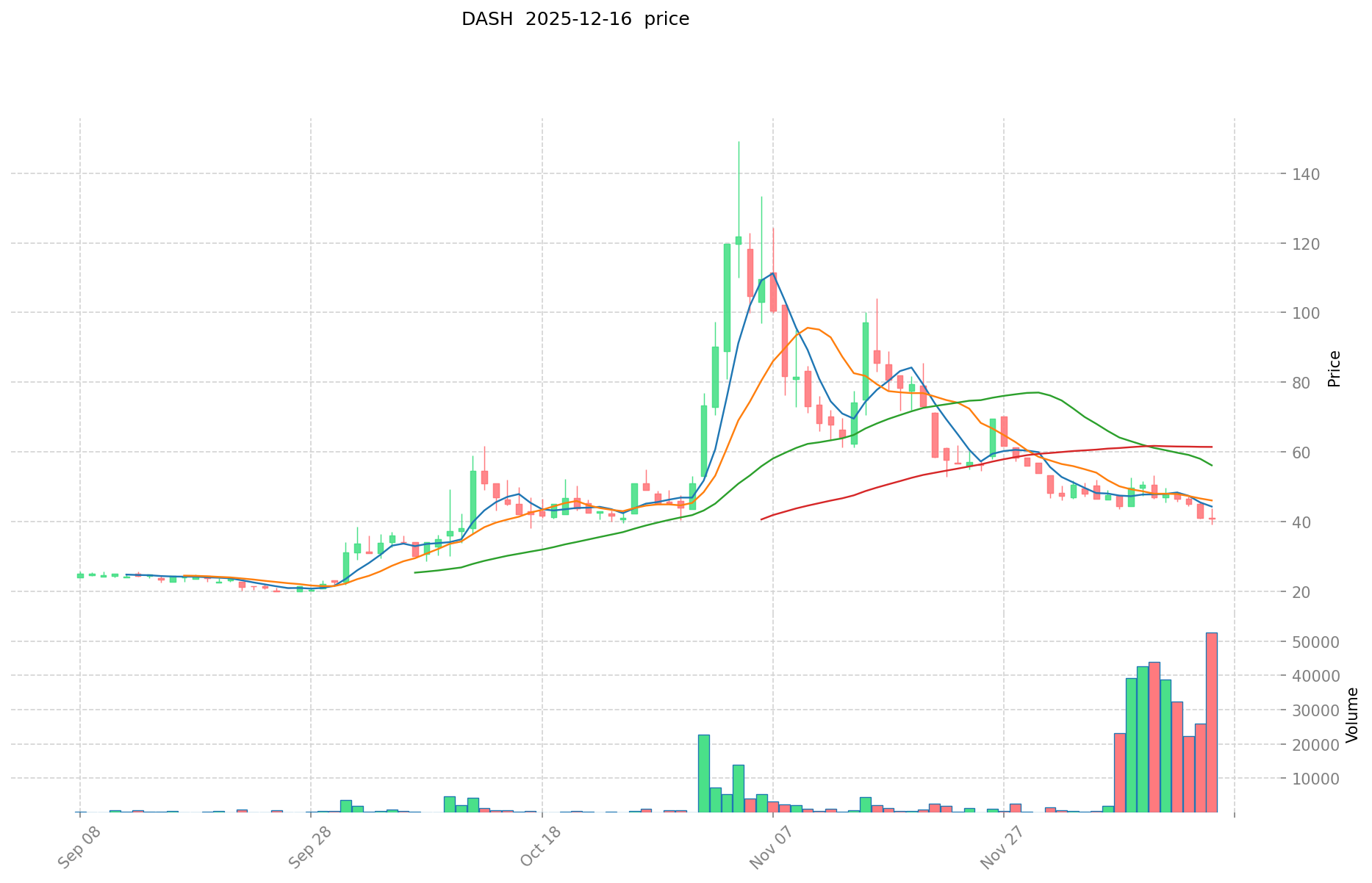
As of December 16, 2025, DASH has a circulating supply of 12,517,533.11558069 coins, with a total supply of 12,517,921.5264153. The maximum supply is capped at 18,920,000 DASH.
Price Fluctuations
DASH reached its all-time high of $1,493.59 on December 20, 2017, driven by the overall cryptocurrency market bull run.
Its lowest price was $0.213899, occurring on February 14, 2014, likely due to the early stages of the project and limited market awareness.
These fluctuations reflect market sentiment, adoption trends, and external factors.
Click to view the current DASH market price
On-chain Metrics
- Daily Transaction Volume: Not available in the provided data
- Active Addresses: Not available in the provided data
- Staking Rate: Not applicable or not available in the provided data
Dash Ecosystem Applications and Partnerships
Core Use Cases
Dash's ecosystem supports various applications:
- Digital Payments: Dash is used for fast and low-cost transactions, providing an alternative to traditional payment methods.
- Remittances: Dash offers solutions for international money transfers, particularly in regions with limited access to traditional banking.
Strategic Collaborations
Dash has established partnerships with various organizations to enhance its technological capabilities and market influence. These partnerships have provided a solid foundation for Dash's ecosystem expansion.
Controversies and Challenges
Dash faces the following challenges:
- Technical Issues: Scaling to meet increased transaction demands
- Regulatory Risks: Potential regulatory scrutiny in various jurisdictions
- Competitive Pressure: The rise of other cryptocurrencies and blockchain platforms
These issues have sparked discussions within the community and market, driving continuous innovation for Dash.
Dash Community and Social Media Atmosphere
Fan Enthusiasm
Dash's community is vibrant, with significant daily transaction volumes and growing wallet addresses. On X (formerly Twitter), posts and hashtags related to Dash often trend, with high monthly post volumes. Factors such as price movements and new feature releases ignite community enthusiasm.
Social Media Sentiment
Sentiment on X shows polarization:
- Supporters praise Dash's speed, low fees, and privacy features, viewing it as a practical digital cash solution.
- Critics focus on issues such as price volatility and adoption challenges.
Recent trends indicate varying sentiment depending on market conditions and project developments.
Hot Topics
X users actively discuss Dash's key issues, including regulatory uncertainties, adoption rates, and technological advancements. These discussions highlight both Dash's potential for financial innovation and the obstacles it faces in achieving mainstream adoption.
More Information Sources for Dash
- Official Website: Visit Dash's official website for features, use cases, and latest updates.
- X Updates: On X, Dash uses @Dashpay, actively sharing updates on technical upgrades, community events, and partnership news.
Dash Future Roadmap
- Ecosystem Goals: Expand adoption and use cases in digital payments and remittances
- Long-term Vision: Become a global digital cash system and decentralized payment network
How to Participate in Dash?
- Purchase Channels: Buy Dash on Gate.com
- Storage Solutions: Use secure wallets recommended by the Dash community
- Governance Participation: Engage in community decisions through Dash's governance mechanisms
- Ecosystem Building: Visit Dash's developer resources to contribute to the network
Summary
Dash redefines digital currency through blockchain technology, offering transparency, security, and efficient payments. Its active community, rich resources, and strong market presence make it stand out in the cryptocurrency space. Despite facing challenges such as regulatory uncertainties and technological hurdles, Dash's innovative spirit and clear roadmap position it as a significant player in the future of decentralized technologies. Whether you're a newcomer or an experienced user, Dash is worth watching and participating in.
FAQ
What is dash as a symbol?
DASH is the symbol for the Dash cryptocurrency, representing a digital cash system focused on fast, low-cost payments.
What is dash for food?
DASH (Dietary Approaches to Stop Hypertension) is a heart-healthy eating plan emphasizing fruits, vegetables, whole grains, and low-fat dairy. It's designed to lower blood pressure and was named the best diet for heart health in 2025.
What is a dash in safeguarding?
DASH in safeguarding stands for Domestic Abuse, Stalking, and Honour-based violence. It's a risk assessment tool used to identify and address these threats in safety planning.
What is the em dash symbol?
The em dash symbol (—) is a long horizontal line used in writing to indicate a pause, break, or emphasis in a sentence. It's longer than a hyphen or en dash.
Share
Content
Dash's Positioning and Significance
Origins and Development History
How Does Dash Work?
DASH Market Performance
Dash Ecosystem Applications and Partnerships
Controversies and Challenges
Dash Community and Social Media Atmosphere
More Information Sources for Dash
Dash Future Roadmap
How to Participate in Dash?
Summary
FAQ
How to Buy Cryptocurrency


Trending Cryptocurrencies



XZXX: A Comprehensive Guide to the BRC-20 Meme Token in 2025

Bitcoin Fear and Greed Index: Market Sentiment Analysis for 2025
Top Crypto ETFs to Watch in 2025: Navigating the Digital Asset Boom

5 ways to get Bitcoin for free in 2025: Newbie Guide

Bitcoin Market Cap in 2025: Analysis and Trends for Investors
2025 Bitcoin Price Prediction: Trump's Tariffs' Impact on BTC

WAL vs CHZ: A Comprehensive Comparison of Two Leading Blockchain Gaming Tokens

0G vs IMX: A Comprehensive Comparison of Two Leading Blockchain Infrastructure Solutions

Is Core DAO (CORE) a good investment?: A comprehensive analysis of tokenomics, governance, and growth potential in 2024
Is Prometeus (PROM) a good investment?: A Comprehensive Analysis of Market Performance, Technology, and Future Potential

Is Amp (AMP) a good investment?: A Comprehensive Analysis of Market Potential, Risk Factors, and Future Outlook